The Department of Physics and Department of Computer Science, School of Basic and Applied Sciences………………………
The Department of Physics and Department of Computer Science, School of Basic and Applied Sciences, Adamas University, jointly organized an International Guest Lecture titled “Secrets of Our Origins: A Quest with the Large Hadron Collider” on 13th February 2026. Dr. Sabyasachi Siddhanta delivered an engaging talk on particle physics, cosmology, and CERN experiments. The session promoted interdisciplinary learning, international exposure, and research motivation among students and faculty.
In a landmark gathering that reaffirmed the civilizational richness of India’s indigenous intellectual heritage, the School of Law & Justice, Adamas University, in collaboration with the Maulana Abul Kalam Azad Institute of Asian Studies (MAKAIAS)
In a landmark gathering that reaffirmed the civilizational richness of India’s indigenous intellectual heritage, the School of Law & Justice, Adamas University, in collaboration with the Maulana Abul Kalam Azad Institute of Asian Studies (MAKAIAS) — an autonomous body under the Ministry of Culture, Government of India — hosted a Seminar on the Indian Knowledge System (IKS): Through the Lens of Decolonization, History, Law and Technology on 17th February 2026, drawing together over a hundred scholars, legal practitioners, technologists, and policymakers under one roof at Kolkata. This seminar was a result of a grant of 2 Lakh 50 Thousands that was funded by MAKAIAS.
The day-long event, graced by Prof. Suranjan Das (Vice Chancellor, Adamas University), Prof. R. Venkata Rao (Vice Chancellor, IIULER, Goa), and Prof. Heeraman Tiwari (Jawaharlal Nehru University). It unfolded as a richly layered intellectual conclave that traversed the full spectrum of India’s epistemic legacy — from the jurisprudential underpinnings of the Arthashastra and the ecological cosmology encoded in Puranic myth, to the pressing contemporary questions of bio-piracy, collective intellectual property, and ethical digitization of oral traditions — with the keynote address by Prof. Das powerfully anchoring the discourse in the mandate of NEP 2020 and its vision of an ‘India-Centric Educational System’ that decolonizes not merely syllabi but the very philosophical foundations of knowledge.
The seminar was particularly notable for its fearless interdisciplinary reach: legal scholars interrogated whether a jurisprudence born of colonial modernity could ever adequately protect knowledge systems built on entirely different ontological premises; historians recovered the subaltern and regional dimensions of IKS that dominant Sanskritic narratives had often obscured; and a biotechnologist from Adamas University electrified the audience by demonstrating how the ‘web of stories, mysteries and myths’ surrounding Jambudwip encoded sophisticated empirical understandings of ecology and medicine centuries before the Enlightenment gave the world its taxonomy of sciences. Perhaps the seminar’s most arresting intellectual motif — one that cut across every session — was the implicit dialogue it opened between Shakespeare and the Mahabharata: where generations of colonial education had elevated the Bard as the supreme summit of dramatic and philosophical imagination while relegating Vyasa’s encyclopaedical epic to the margins of religion and mythology, speaker after speaker drew pointed inferences about the epistemic violence of this asymmetry, arguing that the Mahabharata’s treatment of dharma, statecraft, moral agency, and cosmic jurisprudence not only rivals but in significant ways surpasses anything in the Western literary canon — that Yudhishthira’s dilemmas are as philosophically demanding as Hamlet’s, that the Bhagavad Gita anticipates Kantian ethics and transcends them, and that to finally accord the Mahabharata its rightful place in the Indian university alongside Shakespeare is not an act of cultural chauvinism but of long-overdue epistemic justice. The seminar concluded with a call for the formation of an IKS Consortium — a permanent tri-sectoral platform uniting academia, law, and technology — and the resolve that India’s universities must learn, at last, to know themselves.
The School of Engineering and Technology at Adamas University, under the leadership of Dr. Radha Tamal Goswami, conducted a four-day International Lecture Series in online mode from 16th to 19th February 2026.
The School of Engineering and Technology at Adamas University, under the leadership of Dr. Radha Tamal Goswami, conducted a four-day International Lecture Series in online mode from 16th to 19th February 2026. The programme brought together distinguished academicians and industry professionals who shared current research developments and practical insights with students and faculty members.
The series commenced with a lecture by Dr. Niladri Mandal, DRDO, on advanced aerospace manufacturing technologies. He discussed hybrid manufacturing processes, sustainable practices, Non-Destructive Testing (NDT), Coordinate Measuring Machines (CMM), and metal 3D printing for lightweight components. Dr. A. V. S. S. H. Sravan Kumar from NIT Calicut followed with a session on Industry 4.0, focusing on IoT-enabled smart manufacturing systems and semiconductor fabrication processes including photolithography, Chemical Vapor Deposition (CVD), and plasma etching.
On subsequent days, Dr. Khaja Moiduddin from King Saud University delivered a detailed talk on advanced biomaterials and patient-specific implant manufacturing. His lecture covered PEEK and titanium-based implants, digital surgical planning, Finite Element Analysis (FEA), and additive manufacturing techniques such as Selective Laser Melting (SLM) and Electron Beam Melting (EBM). Dr. Sanjeev Kumar Manjhi from NIT Calicut addressed developments in high-accuracy thermal sensors, highlighting nanomaterials, thin film deposition, flexible sensor fabrication, and calibration methods.
The lecture series concluded with a session by Dr. Natasha Mandal from Lule? University of Technology, Sweden, who spoke on biosensors and smart materials. She discussed advanced characterization techniques, lithography systems, and plasmonics-based Surface Plasmon Resonance (SPR) for healthcare diagnostics.
The International Lecture Series provided a meaningful academic platform for interaction, learning, and exchange of ideas across key areas of engineering, materials science, and emerging technologies.
The Department of Geography celebrated GIS Day 2025 with an innovative and engaging event titled……………………
The Department of Geography celebrated GIS Day 2025 with an innovative and engaging event titled “Field Frames: Stories Beyond the Map”, a digital storytelling competition designed to bring field experiences to life through geospatial narratives.
Through this initiative, students demonstrated how geography is not just mapped, it is felt, observed, and told through powerful stories from the field. Their presentations beautifully captured landscapes, people, processes, and research insights, reflecting the true spirit of GIS and field-based learning.
As a department committed to fostering geospatial excellence, we are delighted to see our students embrace GIS not only as a tool but as a lens to understand the world.
The Department of Geography celebrated GIS Day 2025 with an innovative and engaging event titled “Field Frames: Stories Beyond the Map……..
The Department of Geography celebrated GIS Day 2025 with an innovative and engaging event titled “Field Frames: Stories Beyond the Map”, a digital storytelling competition designed to bring field experiences to life through geospatial narratives.
Through this initiative, students demonstrated how geography is not just mapped, it is felt, observed, and told through powerful stories from the field. Their presentations beautifully captured landscapes, people, processes, and research insights, reflecting the true spirit of GIS and field-based learning.
As a department committed to fostering geospatial excellence, we are delighted to see our students embrace GIS not only as a tool but as a lens to understand the world.
The stage lit up and the crowd sang along as Palak Muchhal delivered a mesmerizing live performance at Adinova 2026. Her soulful voice, electrifying presence
The stage lit up and the crowd sang along as Palak Muchhal delivered a mesmerizing live performance at Adinova 2026. Her soulful voice, electrifying presence, and heartfelt melodies created an atmosphere that will be cherished for years to come. It was a night of music, emotions, and magical memories as the Adamas University campus came alive in celebration. #Adinova2026 #PalakMuchhalLive #AdamasUniversity #NAACA #TransformwithAdamas
The 9th Convocation of Adamas University marked a proud and memorable milestone, celebrating the achievements of our graduating students and reaffirming our commitment to academic excellence and innovation.
The 9th Convocation of Adamas University marked a proud and memorable milestone, celebrating the achievements of our graduating students and reaffirming our commitment to academic excellence and innovation. The ceremony was led by Hon’ble Chancellor, Prof. (Dr.) Samit Ray, alongside Hon’ble Vice Chancellor, Professor Suranjan Das, and respected Mrs. Mallika Roy, Director, Adamas International School, whose leadership continues to guide the University towards new heights.
We were honoured to welcome His Excellency Dr. C. V. Ananda Bose, Hon’ble Governor of West Bengal and Hon’ble Visitor of Adamas University, whose esteemed presence added immense dignity and significance to the occasion. The event was further graced by distinguished guests who were felicitated for their outstanding contributions: Dr. T. G. Sitharam, Former Chairman, AICTE; Mr. Ajit Singh, Global Pharma Visionary & Chairman of ACG; Mr. Preetham Nagarigari, Chairman, SC Corporation, Govt. of Telangana; Mr. Ashish Agarwal, Business Leader and Entrepreneur; Mr. Indrajeet Mitra, Entrepreneur & Co-founder of Gateway Group of Companies; Dr. Satya Gupta, Leader of EPIC Foundation and President of VLSI Society of India; and Professor Amlan Chakrabarti, Director, A.K. Choudhury School of IT, University of Calcutta.
In a moment of great pride, the University conferred the prestigious Honoris Causa upon Mr. Ajit Singh, Mr. Preetham Nagarigari, Mr. Ashish Agarwal, and Mr. Indrajeet Mitra, honouring their exceptional leadership and impactful contributions. The celebration stood as a powerful reminder that at Adamas University, excellence is not only nurtured — it is celebrated.
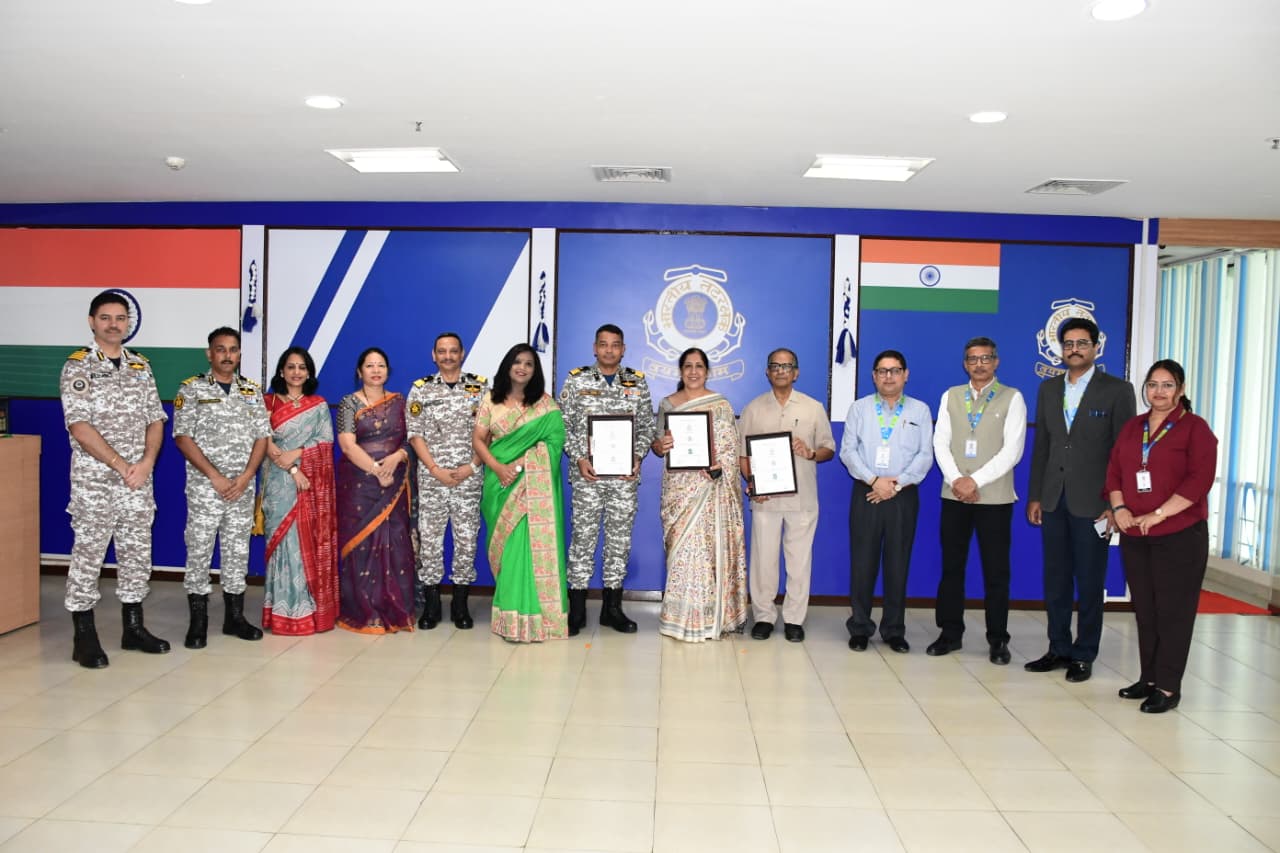
Adamas University has achieved a significant global milestone by becoming the 2nd university in West Bengal to be inducted into the World University Grouping – Magna Charta.
Adamas University has achieved a significant global milestone by becoming the 2nd university in West Bengal to be inducted into the World University Grouping – Magna Charta. The membership was formally accorded on 13th November 2025, with Prof. Suranjan Das receiving the certificate on behalf of the University—marking a proud moment in Adamas University’s commitment to academic freedom, institutional autonomy, and global academic values.
The outdoor engagements under the 2nd Reciprocal International Cultural Immersion Programme unfolded as a celebration of culture, compassion, and shared experiences.
The outdoor engagements under the 2nd Reciprocal International Cultural Immersion Programme unfolded as a celebration of culture, compassion, and shared experiences. Winter days in Kolkata came alive through visits to Eco Park and Mother’s Wax Museum, offering moments of leisure and discovery. Compassion in Action was experienced during a visit to Sree Guru Old Age Home (Bholananda), followed by a meaningful interaction with the Consul General of Bhutan in Kolkata, and a cultural journey to Santiniketan, celebrating heritage, art, community, dialogue, togetherness.
The International Relations Office is pleased to share that under the 2nd Reciprocal International Cultural Immersion Programme (26 January–2 February 2026)
The International Relations Office is pleased to share that under the 2nd Reciprocal International Cultural Immersion Programme (26 January–2 February 2026), Adamas University hosted 10 students and 2 faculty members from Paro College of Education, Royal University of Bhutan. The programme blended academic engagement with cultural immersion through workshops on pedagogy, creativity, and AI in education, campus interactions, school teaching, and cultural sessions such as Bhasha Mitra, Cultural Canvas, and Flavours of India, strengthening international collaboration and cross-cultural learning.