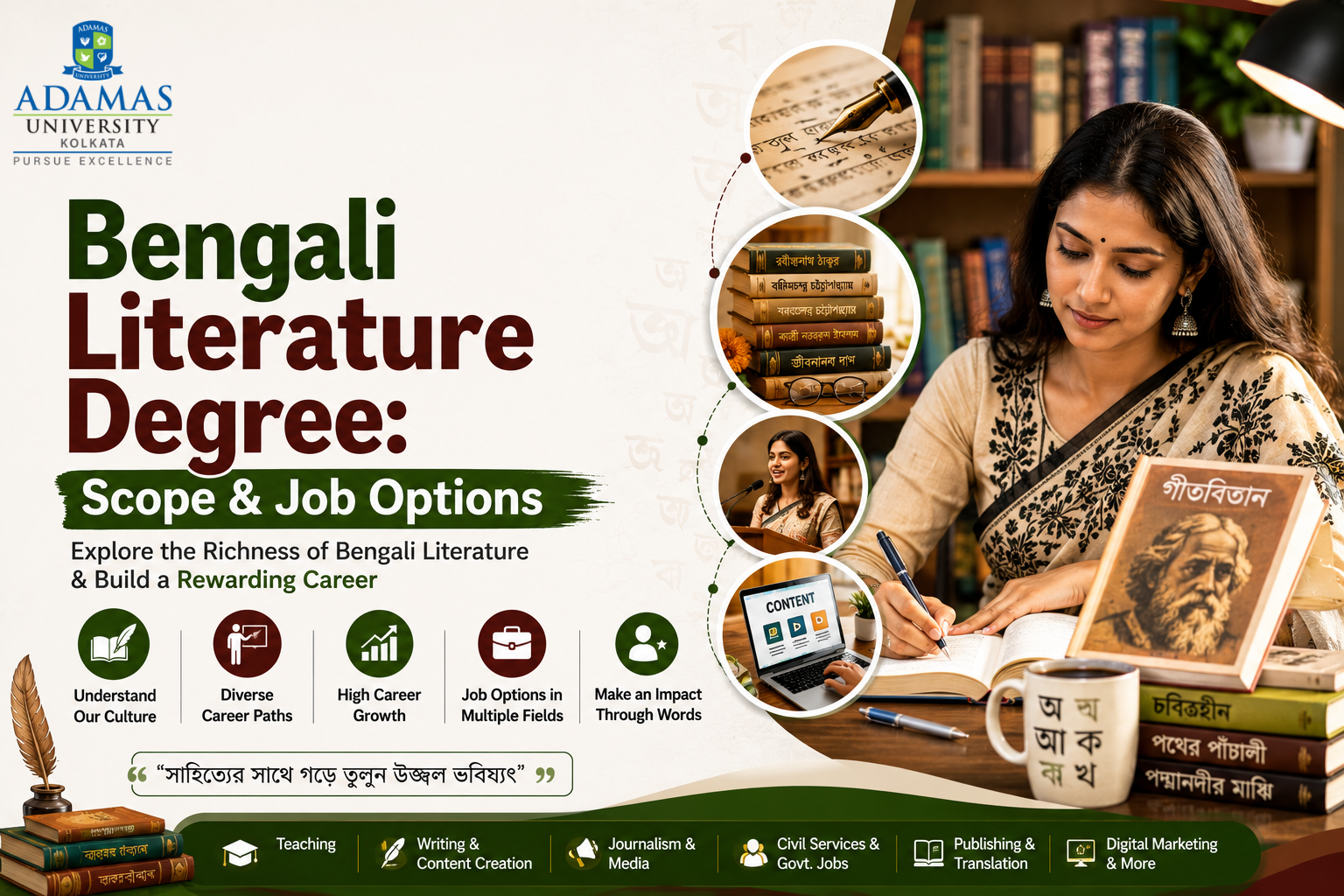
Bengali Literature Degree: Scope & Job Options

A Bengali literature degree is open to more than those who love poems, novels or Rabindranath Tagore. It is for students who want to understand language, culture, history, society, media, writing, and communication at a much deeper and meaningful level.

Bengali is one of the richest literary languages in India. It has strong traditions of poetry, fiction, theatre, music, journalism, cinema, and social thought. A student who picks B.A in Bengali Language and Literature course has to be taught more than just texts. They have to learn how language creates people, politics, identity, creativity and public communication.

Many students and parents think, even today, that a literature degree can only lead to teaching. Teaching is a worthy option, but not the only one. Today Bengali Literature Course can open to the student jobs in content writing, publishing, translating, journalism, media, OTT, advertising, research, and public-sector exam preparation.

For students who like reading, writing, analysis and expression, BA Bengali Honours is a powerful choice.

Quick Points About Bengali Literature Degree

Here is the simple view:

  • Course name: B.A Bengali Language and Literature
  • Common search term: BA Bengali Honours
  • Course level: Undergraduate
  • Duration: Usually 3 to 4 years, depending on NEP structure
  • Eligibility: 10+2 from a recognised board
  • Best suited for: Students who like reading, writing, culture, language and analysis
  • Career areas: Teaching, media, publishing, translation, content, research, advertising and civil services preparation
  • Higher study options: MA Bengali, B.Ed, NET, SET, PhD, journalism, translation or cultural studies

What Is a Bengali Literature Course?

A Bengali Literature Course studies the Bengali language, literature and culture across different time periods.

Students read poetry, novels, short stories, drama, essays, folk literature, literary criticism and modern writing. They also study the history of the Bengali language, literary movements, social change and cultural context.

The course helps students understand how literature reflects real life. It also teaches them to read carefully, think critically and write clearly.

Common subjects may include:

  • History of Bengali literature
  • Bengali poetry
  • Bengali fiction
  • Bengali drama
  • Bengali linguistics
  • Tagore literature
  • Medieval Bengali literature
  • Modern Bengali literature
  • Literary theory
  • Folk literature
  • Translation
  • Creative writing
  • Media writing
  • Research writing

This makes the course useful for students who want both academic depth and communication-based career options.

Why Choose BA Bengali Honours?

The BA Bengali Honours is a good choice for students who want to build a strong command of the Bengali language.

It helps students develop:

  • Reading ability
  • Writing skills
  • Analytical thinking
  • Cultural understanding
  • Research skills
  • Communication confidence
  • Translation ability
  • Creative expression

These skills are useful in many fields.

A student who can understand language well can write better, explain better and connect with audiences better. This is important in media, education, publishing, advertising and digital content.

In Bengal and other Bengali-speaking regions, strong language skills still hold value in many professional spaces.

Scope After Bengali Literature Degree

The scope of a Bengali Literature Course depends on how the student uses the degree.

A student who only studies for exams may have limited options. But a student who builds writing, research, digital, communication and teaching skills can explore many career paths.

After a B.A Bengali Language and Literature degree, students can go into:

  • Teaching
  • Publishing
  • Journalism
  • Translation
  • Content writing
  • Script writing
  • Advertising
  • Film and OTT writing support
  • Research
  • Editing
  • Civil service preparation
  • Cultural organisations
  • Public relations
  • Digital media

The degree also supports higher studies. Many students pursue MA Bengali, B.Ed, NET, SET, PhD, journalism, mass communication or translation studies.

Top Job Options After Bengali Literature Degree

1. Teacher

Teaching is one of the most common career options after a BA Bengali Honours.

Students can teach at schools after completing the required teacher training course, such as B.Ed. For college-level teaching, students usually need an MA in Bengali and a NET or SET qualification.

This path is good for students who enjoy explaining literature and working with learners.

2. Content Writer

Bengali content is needed for websites, social media, YouTube scripts, blogs, news portals, education platforms and regional brands.

A student with a strong Bengali background can write articles, captions, scripts, stories, product descriptions and marketing content.

This role suits students who enjoy writing in a clear and relatable style.

3. Translator and Interpreter

Translation is a useful career for Bengali literature graduates.

Students can translate books, government documents, subtitles, educational material, legal documents, website content and media scripts.

Good translators need more than word-for-word conversion. They must understand tone, context and meaning.

  1. Journalist

Students interested in current affairs may also take the plunge into journalism, working with newspapers, news websites, TV channels, digital news platforms, and even local reporting teams. A journalism course after graduation will give you the much-needed edge. The Bengali language strength will come in handy while reporting, or possibly, translating news for the Bengali reading audience.

  1. Publishing assistant or editor

Publishing houses need people who can read, assess the right language, edit the content and do the needful parts of the book-making process. Hence, the Bengali literature graduate can fit in well into the editorial teams of books, proofreading, manuscript review and publishing coordination. Good for students who love books and detailed reading.

  1. Script writer for media, film and OTT 

Regional content is on the rise, be it on TV, YouTube, short films, OTT content, and even audio platforms. If you have a flair for storytelling, you can step into script writing, dialogue writing and screenplay support. In some cases, podcast scripting, even content development. A good grounding in literature will help since you already study character, plot, emotion and narrative.

  1. Research Assistant

Well-suited to students intent on academics, the research assistant dives into projects on issues of language, literature, culture, folklore, theatre or media, depending on the focus of the leading faculty. This option is of more of a strength after an MA in Bengali, and preferably a PhD. Like deep reading and writing research-based papers.

Jobs and Salary After Bengali Literature Course

Salary depends on skills, location, employer and qualification.

Job Role

Work Area

Approximate Salary Range

Bengali Teacher

Schools and coaching centres

₹2.5 to ₹5 LPA

Content Writer

Websites, brands and agencies

₹2.5 to ₹5 LPA

Translator

Publishing, legal, media and corporate work

₹3 to ₹6 LPA

Journalist

News media and digital platforms

₹2.5 to ₹5 LPA

Editor or Proofreader

Publishing houses and media teams

₹3 to ₹6 LPA

Script Writer

Film, OTT, YouTube and audio platforms

₹3 to ₹7 LPA

Research Assistant

Academic and cultural research projects

₹3 to ₹5 LPA

Freshers may start with modest pay. Growth improves when students build practical skills like editing, digital writing, translation tools, research writing and public speaking.

Skills Needed After BA Bengali Honours

A degree gives the base. Skills build a career.

Students should focus on:

  • Strong Bengali writing
  • Good reading habit
  • Grammar and editing
  • Translation ability
  • Research writing
  • Digital content writing
  • Public speaking
  • Basic computer skills
  • Critical thinking
  • Creative writing

Students who learn English communication along with Bengali also get wider opportunities.

Why Choose Adamas University for a Bengali Literature Degree

Adamas University offers B.A Bengali Language and Literature under the School of Liberal Arts and Culture Studies.

The program follows the NEP structure and includes a 4-year duration with an exit option after 3 years. The course is designed with liberal education, interdisciplinary learning, skill-based papers and industry-friendly learning.

The university also mentions career avenues such as media houses, translation and interpretation, content writing, film and OTT, publication houses, entrepreneurship and advertising agencies.

For students looking for a Bengali Literature Course in Kolkata, Adamas University can be considered for its structured curriculum, skill-focused approach and pathway to higher studies such as MA and PhD.

Conclusion

Pursuing Bengali Literature is an exciting option for students who love language, reading and writing, and wish to explore culture.

Students can expect rewarding careers in teaching, content writing, translation, publishing, journalism, media, advertising and research after completing the B.A Bengali Language and Literature course. It also makes for a great stepping stone for MA Bengali, B.Ed, NET, SET, PhD, and even preparing for competitive exams.

Students should not treat BA Bengali Honours as a narrow degree where jobs are limited. With appropriate skills, a BA in Bengali can lead to both academic and creative careers.

Students who are interested in studying a Bengali Literature Course in Kolkata can find out more about this programme at Adamas University and apply through the website.

FAQs

What is B.A Bengali Language and Literature?

B.A Bengali Language and Literature is an undergraduate programme that teaches the art and science of the language, studying poetry, fictions and drama by great poets and writers, literary history, literary criticism and culture.

Is BA Bengali Honours good for career?

Yes, you can expect a fulfilling and rewarding career in teaching, content writing, translation, journalism, publishing, media, research or preparing for competitive exams.

What jobs can the students get after a Bengali Literature Course?

Teaching, content writing, translation, editing, journalism, publishing assistant, script writer, research assistant, etc.

Can Bengali literature students prepare for government exams?

Yes, Bengali literature students can prepare for exams like the WBCS, UPSC, SSC, State PSC, NET, SET etc, depending on eligibility.

Does Adamas University have Bengali Literature?

Yes. Adamas University offers B.A Bengali Language and Literature course under the School of Liberal Arts and Culture Studies.
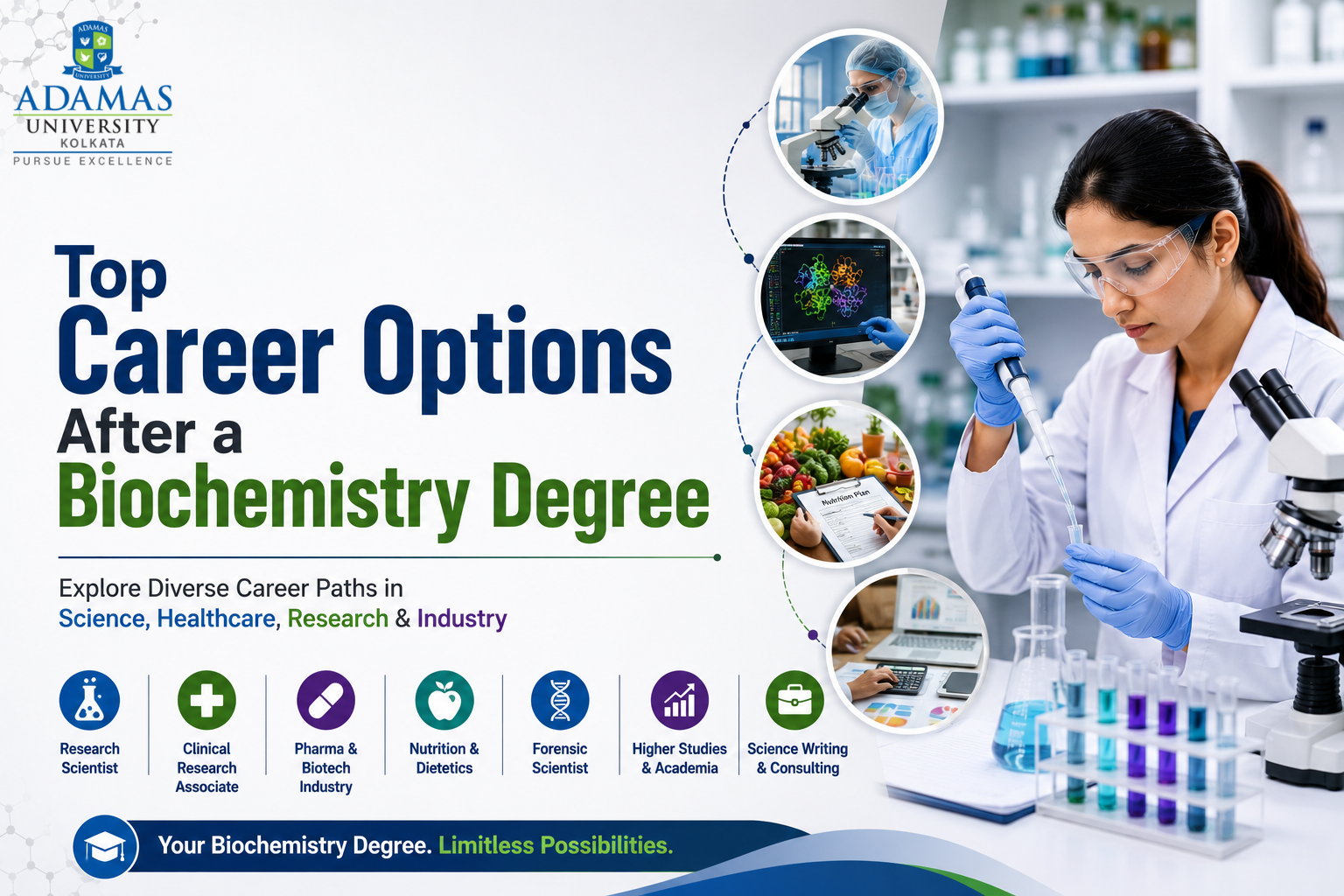
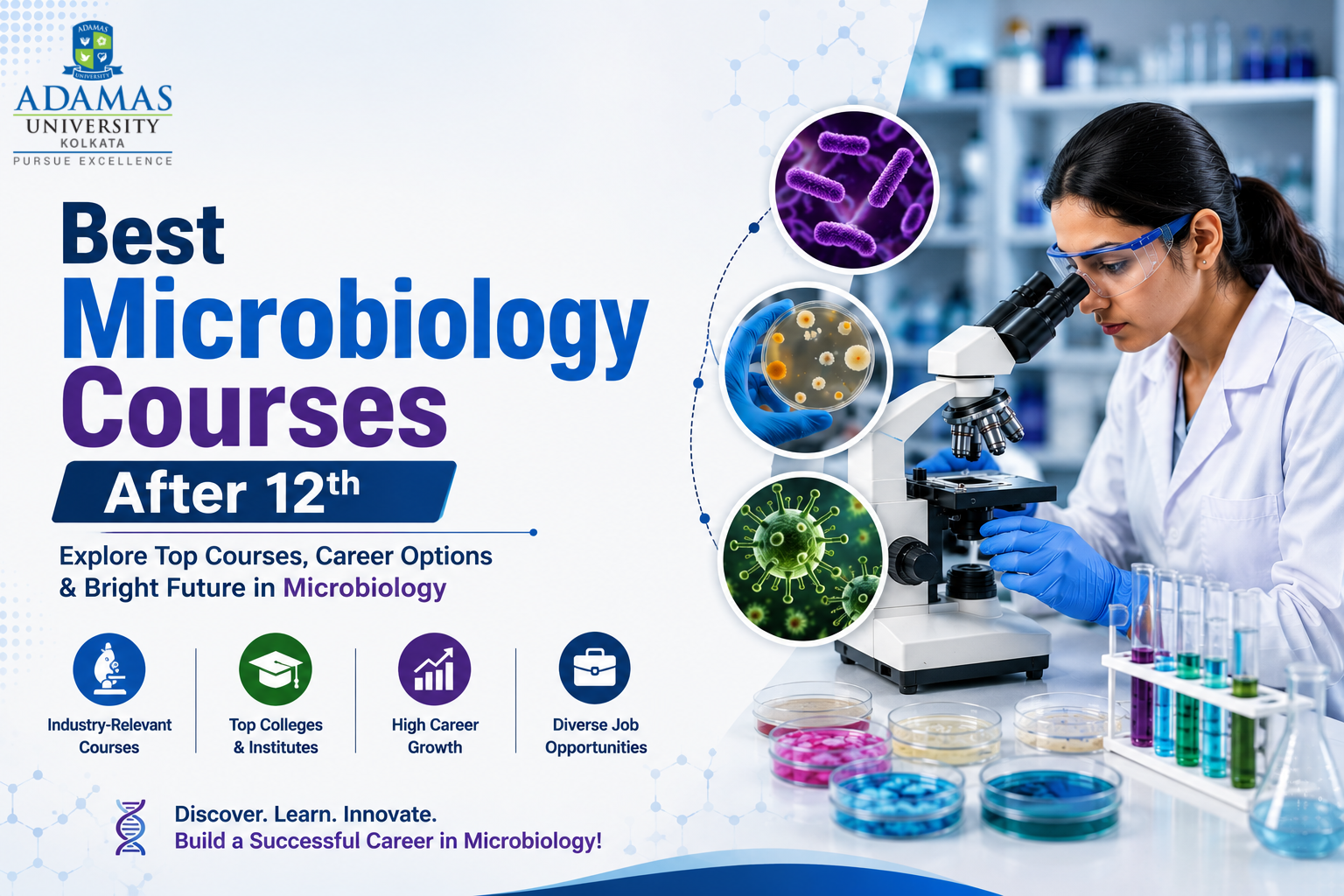
Top Career Options After a Biochemistry Degree

A blood test, a medicine, a vaccine, a food safety report and a genetic study may look like different worlds. But all are linked by one subject: Biochemistry.

Biochemistry studies the chemical processes happening inside living organisms. In other words, it talks about how cells work, how enzymes act, how diseases form, how medicines work and how nutrition is used in the body.

That is why a Biochemistry Degree can lead you into careers in healthcare, diagnostics, pharma, biotechnology, food science, research and academics.

Students who take a Biochemistry Course commonly love biology and chemistry together. They are inquisitive about what is happening in the body, at a molecular level. A lot of them take a BSc Biochemistry after class 12. Many of them also take an MSc Biochemistry to get better and more opportunities in the lab, research and industry.

The career roadmap may not be apparent in the first year. But with the right skills, lab exposure and specialisation, biochemistry can lead to great and fulfilling career options.

Quick Career Snapshot After Biochemistry

Here is the simple view:

  • BSc Biochemistry builds the foundation in life sciences and chemistry.
  • MSc Biochemistry gives deeper knowledge and better access to advanced roles.
  • Career options exist in pharma, diagnostics, research, food testing, biotechnology and teaching.
  • Lab skills matter as much as theory.
  • Higher studies can improve growth.
  • Students can work in both private and government-linked sectors.
  • A Biochemistry Degree is useful for students who like research, analysis and practical science.

What Is a Biochemistry Course?

A Biochemistry Course studies the chemistry of life.

It teaches students how living systems function at the molecular level. This includes proteins, enzymes, carbohydrates, lipids, DNA, RNA, metabolism, hormones, diseases and biochemical reactions.

In simple words, biochemistry helps students understand the science behind health, medicine, food, cells and disease.

Common subjects include:

  • Cell biology
  • Biomolecules
  • Enzymology
  • Metabolism
  • Molecular biology
  • Genetics
  • Immunology
  • Clinical biochemistry
  • Microbiology
  • Analytical techniques
  • Biostatistics
  • Biotechnology basics
  • Research methodology

The subject is practical by nature. Students spend time in labs learning techniques such as pipetting, sample preparation, centrifugation, chromatography, electrophoresis, spectrophotometry and biochemical analysis.

BSc Biochemistry vs MSc Biochemistry

Students often ask whether a BSc Biochemistry is enough or whether an MSc Biochemistry is needed.

The answer depends on the career goal.

Course

Best For

Career Use

BSc Biochemistry

Students starting after 12th

Entry-level lab, quality control, research assistant and higher study options

MSc Biochemistry

Graduates who want deeper specialisation

Better roles in research, pharma, clinical labs, teaching and advanced technical work

A bachelor’s degree can help students enter basic roles. A master’s degree usually gives stronger opportunities in research, diagnostics, quality control, teaching and specialised industry roles.

Students interested in PhD, research scientist roles or academic careers should strongly consider postgraduate study.

Top Career Options After a Biochemistry Degree

1. Research Assistant

A research assistant is one of the most common starting roles after a Biochemistry Degree.

Students work in research labs, universities, pharma companies, biotech firms or government-funded projects. The work may include sample testing, experiment support, data recording, report writing and lab maintenance.

This role is good for students who enjoy experiments and want to build a research career.

2. Quality Control Analyst

Quality control is a strong career option in pharma, food, biotech and healthcare product companies.

A quality control analyst checks whether products meet required safety and quality standards. The work may involve raw material testing, batch testing, documentation, equipment handling and compliance support.

Students with strong lab discipline can do well in this role.

3. Clinical Laboratory Scientist

Clinical labs need trained professionals who understand biochemical testing.

A clinical laboratory scientist or lab analyst may work with blood, urine or other patient samples. They support testing related to liver function, kidney function, blood sugar, hormones, enzymes and other health markers.

This role connects biochemistry directly with patient care.

4. Pharmaceutical Executive

Pharma companies need biochemistry graduates for research, production support, quality assurance, documentation, regulatory support and product testing.

A student with MSc Biochemistry may get better access to technical roles in pharma. Over time, this path can lead to quality assurance, R&D or regulatory affairs.

5. Biotechnologist

Biochemistry and biotechnology are closely linked.

Biotechnologists work with biological systems to develop products or processes in healthcare, agriculture, the environment, food and industry. A biochemistry student can move into this field by building skills in molecular biology, cell culture, genetics and bioprocessing.

This option is useful for students who want applied science careers.

  1. Food Safety and Quality Executive

Food companies require smart professionals who can relate nutrients, enzymes, and microbes to understand contamination and testing.

A food quality executive may operate at food company labs, product plants or in quality departments. The role involves checking product quality, safety, shelf life, hygiene, and general compliance.

Students interested in the world of food can explore this career after a Biochemistry Course.

  1. Clinical Research Associate

This is yet another of the popular areas in clinical research.

A clinical research associate essentially helps to manage the overall project, assist in clinical trial planning and documentation, helps in site coordination, protocol compliance, and data quality.

This role, with a good dose of science involved also requires communication skills and attention to detail.

Students can pursue extra training or certification in clinical research before opting for this field.

  1. Medical Writer or Scientific Content Writer

Not every biochemistry graduate has to stay in the lab.

Any student who has a passion for science as well as the pen must check out medical writing, scientific content, writing research summaries, health care communication, and pharma documentation.

This role can be an attractive option for students who can explain the biggest science in words that the layman understands.

9. Teaching and Academics

Students who enjoy explaining concepts can move into teaching.

After MSc Biochemistry, students may teach at schools, coaching institutes or colleges, depending on eligibility. For university-level teaching and research, a PhD and required qualifications may be needed.

Academics is a good path for students who like mentoring, research and long-term subject depth.

Jobs and Salary After Biochemistry Degree

Salary depends on qualification, city, skills, employer and experience.

Job Role

Suitable Qualification

Approximate Salary Range

Lab Technician

BSc Biochemistry

₹2.5 to ₹3.5 LPA

Research Assistant

BSc or MSc Biochemistry

₹3 to ₹5 LPA

Quality Control Analyst

BSc or MSc Biochemistry

₹3 to ₹5.5 LPA

Clinical Lab Scientist

BSc or MSc Biochemistry

₹2.5 to ₹5 LPA

Clinical Research Associate

MSc Biochemistry preferred

₹4 to ₹6.5 LPA

Biotechnologist

BSc or MSc Biochemistry with relevant skills

₹3.5 to ₹6 LPA

Medical Writer

BSc or MSc Biochemistry

₹3.5 to ₹6 LPA

Research Scientist

MSc, PhD preferred

₹5 to ₹9 LPA or more

Freshers should focus first on building skills. In biochemistry, growth improves with lab accuracy, technical training, higher studies and hands-on experience.

Skills Needed for a Good Biochemistry Career

A degree gives the base. Skills build a career.

Students should focus on:

  • Lab safety
  • Analytical thinking
  • Scientific writing
  • Data handling
  • Instrument knowledge
  • Sample testing
  • Documentation
  • Research reading
  • Communication skills
  • Basic statistics
  • Problem-solving

Biochemistry rewards students who are patient. Experiments may fail. Reports need accuracy. Results need careful interpretation. This field suits students who can work with detail.

Why Choose Adamas University for Biochemistry Degree

Adamas University offers BSc Biochemistry and MSc Biochemistry under the School of Life Science and Biotechnology.

The university lists BSc Biochemistry as a 4-year program with an exit option after 3 years as per NEP guidelines. It also offers MSc Biochemistry as a 2-year postgraduate program for students who want deeper study in the subject.

The biochemistry program focuses on basic and applied biochemistry, modern tools and techniques, research thinking and allied life science fields. For students looking for a Biochemistry Degree in Kolkata, Adamas University can be considered for its structured course pathway from undergraduate to postgraduate study.

Students can check the latest eligibility, fee details and admission process on the official Adamas University website.

Conclusion

If you enjoy biology, chemistry, and lab work and research-based thinking, this is the best bet.

After completing a BSc Biochemistry, take up entry-level laboratory work, quality or research assistant jobs. After completing MSc Biochemistry, seek better opportunities in pharma, diagnostics, biotechnologies, research, clinical trials, food quality and safety and even into teaching.

“What to choose goes by choice of student” naturally; some will do lab research, pharma jobs, move into jobs in clinical research, and into write-ups and teaching and beyond into R&D.

Students want to build careers for themselves; they should check the Biochemistry Course options at Adamas University and apply from the official website.

FAQs

  1. What are the best career options after a Biochemistry Degree?
  2. Research assistant;
  3. Quality Controller;
  4. Clinical Lab Scientist;
  5. Pharmaceutical executive;
  6. Biotechnologist;
  7. Clinical research associate;
  8. Food quality executive;
  9. Medical writer;
  10. teacher.
  11. Is a BSc Biochemistry good for a career?

BSc Biochemistry is good. Moving forward to MSc Biochemistry opens better pathways.

Entry-level laboratory work, quality, research support, higher studies, etc. are options. Students who choose the next level with MSc Biochemistry will have access to better technical opportunities and R&D places.

  1. What can students do after an MSc in Biochemistry?

MSc Biochemistry is solid. Search for places in the pharma field, diagnostic, biotech, in the clinical research, food testing places, work in research labs, teach, or pursue a PhD.

  1. What is the salary after the Biochemistry Course?

Expect as a fresher, maybe about 2.5 LPA to 5 LPA, depending on the place of work and type of work. Choose advanced roles after MSc or PhD, or with experience and salary reaches good levels from there.

  1. Does Adamas University offer Biochemistry courses?

Yes. Bachelor’s and Master about biochemistry in the School of Life Science and Bio Technology.

Best Microbiology Courses After 12th

A single drop of curd, a small amount of soil, a test-tube of blood culture or a glass full of unpurified water can provide a much larger indication of life than most think.

These indications of life are studied in the science of microbiology.

Microbiology is the study of all forms of the tiniest living organisms, including but not limited to bacteria, fungi, viruses, algae and protozoa. Most often, these organisms are unseen to the naked eye; however, they all have a huge impact on all aspects of living – health, food, agriculture, pharmaceuticals/medications, water quality, the surrounding habitat of the planet and even on the production industry.

Thus, for students with a love of biological sciences and the desire not to follow the medically driven route of advancement, entering the world of Microbiology Courses after the 12th grade can open many different career possibilities. 

By following this route, a student can enter the field of healthcare through laboratories, pharmaceutical companies, food manufacturers and testing, research, the field of biotechnology, the field of environmental testing and for those students wishing to pursue a career in microbiology, through their education, higher levels of education are also possible.

Points on Microbiology Courses

  • UG Deg: BSc Microbiology (BSc stands for Degree done at College)
  • Higher degree options: MSc in Microbiology
  • Field of Studies: Life Science/Bio Science
  • Ideal for: Student [PCB] attains work/loves biology
  • Courses Studied: Bacteriology, Virology, Mycology, Immunology, Microbial Genetics, Industrial Microbiology.
  • Work Areas: Pharmaceuticals, Food Testing, Hospital Testing; Research Laboratory Work; Quality Assurance; Biotechnology.
  • Career Types: Research/Laboratory-Based; Attention to Detail.

What is Microbiology

Microbiology is the Science of the Microscopic World, including Microorganisms and Their Importance to Human Health/Disease, as Well as Food/Industry/The Environment.

Microorganisms can cause infections; they are used in making drugs/medicines; they are used in the fermentation of food; they can help maintain healthy soil; and they can provide information for developing vaccines, antibiotic drugs, and diagnostic procedures.

Microbiology is Useful/Valuable because it provides Real-World Applications by Connecting Classroom Biology with Laboratory Research & Practice.

An Excellent Microbiology Course Provides Students with Knowledge About the Growth of Microorganisms, How Microorganisms Act, and how to Isolate/Measure Microorganisms/Control Microorganisms through their Study/Use.

Class attendance will involve both Classroom Work and Laboratory Time through the use of Laboratory Equipment, i.e. Theory, Laboratory Microscopy, Culture Methods, Identification of Microbial Morphology & Characteristics, Testing Methods – Biochemical Testing Procedures/Good Laboratory Practices – AND Research Reports/Projects.

Best Microbiology Courses After 12th

It is not possible for students to apply for MSc Microbiology directly after completing Year 12. They must have an undergraduate qualification beforehand.

The following are some of the best options for students after Year 12:

  1. BSc Microbiology

A BSc in Microbiology is the most relevant choice for students who intend to study Microbiology. This science course studies bacteria, viruses, fungi (including parasites), microbial physiology, and immunology, as well as genetics, food-related, and clinical microbiology, industrially.

Students interested in working in research, quality control, diagnostics, or pursuing advanced degrees and who enjoy laboratory work, should consider this as a means to prepare for their future.

  1. BSc Biotechnology

A BSc in Biotechnology is also appropriate for students who are interested in studying Genetics, Molecular Biology, Bioprocessing, Applied Biological Sciences, and Microbiology because all of these subjects are included as part of the broader field of Biotechnology.

Students will have the opportunity to seek employment in Biotechnology firms, Research Laboratories (R&D), or in Pharmaceutical Companies.

3. BSc Biochemistry

A BSc in Biochemistry focuses on the study of the chemical activities that occur within the cells of living organisms.

This course may be appropriate for students concerned with all aspects of enzymes, metabolic processes, proteins, molecular biology, and clinical testing; such students could proceed toward microbiology, biotechnology, or through diagnostic testing at laboratory facilities to pursue their interests through research.

4. BSc Medical Laboratory Technology

The focus of this program is primarily on healthcare. Students in this program are taught how to set up, analyse and perform sample testing/diagnostic procedures safely and accurately within a healthcare and clinical laboratory environment. 

  1. MSc Microbiology After Graduation

While this program could be considered Microbiology “related,” if students are interested in working with bacteria and other microorganisms within a “Hospital Laboratory” or “Diagnostic Setting” they can find it useful.

To attain their MSc in Microbiology, students will need to possess a Bachelor’s Degree within a microbiology-related field before applying. The MSc program offers in-depth knowledge of various fields such as medical microbiology, environmental microbiology, industrial microbiology, microbial genetics, immunology and research methodologies.

Students interested in pursuing higher-level research, education opportunities or advanced industry roles often choose the MSc program upon completion of their BSc in Microbiology.

Microbiology Course Details: Subjects and Learning Areas

The exact subject matter included on the syllabus will be different at each university; however, the vast majority of Microbiology courses utilise the same fundamental subject areas as part of their programmatic curriculum. 

Students usually study:

  • General microbiology
  • Bacteriology
  • Virology
  • Mycology
  • Immunology
  • Microbial genetics
  • Molecular biology
  • Food microbiology
  • Industrial microbiology
  • Environmental microbiology
  • Medical microbiology
  • Biochemistry
  • Bioinformatics basics
  • Research methodology

The course will not only consist of lectures; you will also need to participate in lab work as part of the course. In order to truly learn microbiology, it is necessary for you to perform practical lab skills in addition to reading about them in textbooks.

Examples of these practical lab skills are: handling microbiological samples, preparing microscope slides, observing microorganisms under a microscope, culturing microorganisms, performing microbiological testing, and following laboratory safety procedures.

Eligibility for Microbiology Courses After 12th

The eligibility for a Microbiology Degree Course depends on the institution.

In most cases, students need:

  • 10+2 or equivalent from a recognised board
  • Science stream
  • Biology is one of the main subjects
  • Physics and Chemistry in many universities
  • Minimum marks as required by the college
  • Merit-based or entrance-based admission, depending on the university

Typically, students require an undergraduate-level program to study for a Master’s Degree (MSc) in microbiology, having obtained a Bachelor of Science or Bachelor of Arts degree in microbiology or a related life science field.

Before submitting your application materials, always visit the university’s website to ensure that you meet all of its most up-to-date application requirements.

Career Scope After BSc Microbiology and MSc Microbiology

The scope of microbiology will remain consistent through time as microorganisms affect numerous industries.

Hospitals require microbiological assistance to provide services for testing infections. Pharmaceutical companies employ microbiologists to assist with manufacturing products and ensuring product quality. Food manufacturers require microbiology testing services to evaluate the possibility of contamination and food safety. Research laboratories require trained individuals to evaluate data and carry out experiments. Environmental laboratories conduct testing on water, soil and waste materials.

After a BSc Microbiology or an MSc Microbiology, students can work in:

  • Pharmaceutical companies
  • Food and beverage companies
  • Diagnostic laboratories
  • Hospitals
  • Biotechnology firms
  • Research centres
  • Environmental testing labs
  • Agriculture labs
  • Quality control departments
  • Academic institutions

Students who complete a master’s degree usually get better access to research, teaching and specialised technical roles.

Jobs and Salary After Microbiology Courses

Freshers usually begin with junior roles. Salary improves with higher studies, lab skills, location and experience.

Job Role

Main Work Area

Approximate Salary Range

Lab Technician

Routine lab testing and sample handling

₹2 to ₹3 LPA

Junior Microbiologist

Microbial testing and reporting

₹2.5 to ₹4 LPA

Quality Control Analyst

Pharma, food or biotech quality testing

₹3 to ₹5 LPA

Research Assistant

Research labs and project work

₹3 to ₹5 LPA

Food Microbiologist

Food safety and contamination testing

₹3 to ₹5.5 LPA

Clinical Microbiology Assistant

Hospital and diagnostic lab support

₹2.5 to ₹4.5 LPA

Microbiology Lecturer

Teaching after a higher qualification

₹4 to ₹7 LPA

Students should not choose microbiology only by looking at the starting salary. It is a field where growth depends on skills, accuracy, higher studies and lab exposure.

BSc Microbiology and MSc Microbiology at Adamas University

Microbiology will be studied at Adamas University through two different programs in the School of Life Science and Biotechnology. With a focus on hands-on lab skills complemented by theory (not just memorisation!) and research comprehension as well as applied areas, our Microbiology program incorporates multiple fields of study, including (but not limited to) Industrial Microbiology, Food & Beverage Testing, Pharmaceutical applications, and Medical/Clinical Microbiology.

Adamas University offers 2 Microbiology Courses (BSc and MSc) during the 2026-27 academic year. The BSc degree requires a minimum of 55% for admission from 10 + 2 or equivalent with the appropriate subjects. The MSc degree requires a minimum of 50% from both the 10 + 2 and the Undergraduate degrees in the respective subject areas (Microbiology).

If you’re looking for structured Microbiology Courses in Kolkata today, check out the BSc and MSc programs at Adamas University or visit the official admission page for all up-to-date information.

Conclusion

Students who love biology, lab work, and solving scientific problems should consider microbiology as a subject of study.

Students who pursue a BSc in Microbiology will have the necessary foundation for a career in microbiology following the 12th standard. An MSc in Microbiology will further enhance your options for future employment in research, pharmaceutical companies, food safety organisations, health care laboratories, biotechnological companies, and teaching.

When comparing various microbiology course options, prospective students should examine the duration of the course (BSc or MSc), the availability of laboratories, course syllabi, instructors, opportunities for research, opportunities for experience through internships, and assistance with job placement.

Students interested in studying microbiology should investigate the university’s offerings of BSc and MSc degrees in microbiology and apply to study at one of the programs listed on our website.

FAQs

  • What’s the best microbiology course after the 12th?

Students who want to study microbes, how to do laboratory work, the study of diseases, how to test food, and work with the industrial use of microbes should take the BSc in Microbiology after the 12th grade.

  • Can I get an MSc in microbiology after the 12th?

No. To be eligible for an MSc program in microbiology, you must have completed a bachelor’s degree first. Students may apply for the MSc program after they complete their BSc in Microbiology or a related Life Science bachelor’s degree.

  • What types of jobs are available for people who study microbiology?(h3)

Individuals who study microbiology have the opportunity to work as technical laboratory personnel, junior microbiologists, Quality Control (QC) Analysts, Research Assistants, Food Microbiologists, Clinical Laboratory Assistants, and Teaching Professionals, after earning master’s level qualifications. 

  • Is Microbiology a good career option in India?

Yes, it is! There are many different types of careers available through Microbiology in India, such as healthcare, pharmaceuticals, food safety, biotechnology, agriculture, research, and environmental testing. The most effective way to advance your career is through training at an accredited institution, as well as gaining experience from a hands-on laboratory setting.

  • Does Adamas University have Courses in Microbiology?

Yes, Adamas University offers courses in Microbiology, including a BSc in Microbiology and an MSc in Microbiology, through the School of Life Sciences and Biotechnology.

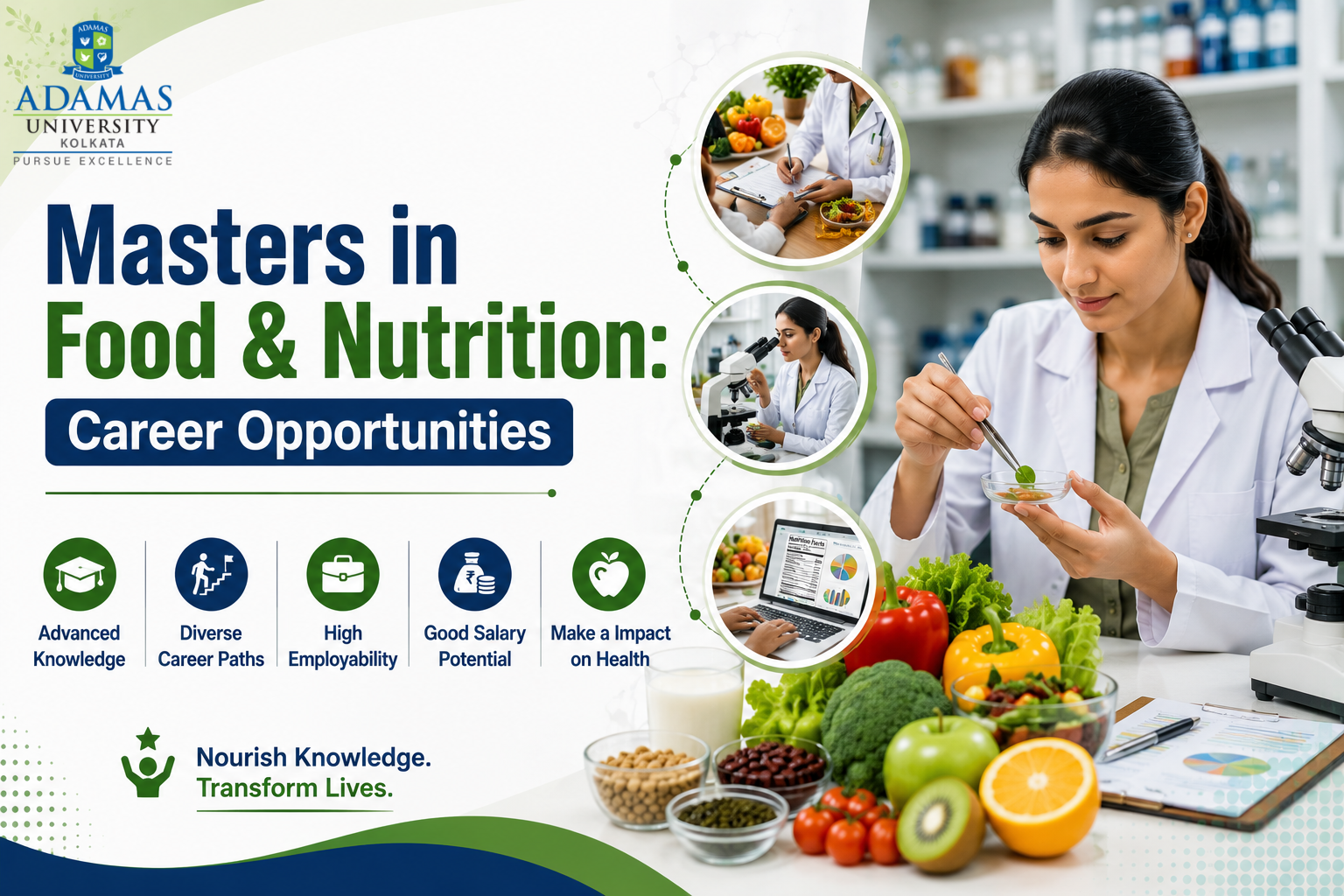
Masters in Food & Nutrition: Career Opportunities

Food is associated with health concerns such as obesity, diabetes, heart disease, digestive disease, children’s nutrition, athletic performance, mental health, and surgical recovery. 

As a result, nutrition professionals are increasingly in demand at hospitals, well-being facilities, manufacturers of food, schools, gyms, and public health.

The Master of Science in Food and Nutrition degree provides an understanding of how food/nutrition work within our bodies and does not just focus on a meal plan. If you hold an undergraduate degree in nutrition, food science, home economics, biology, or other related fields, you may enter the fields of clinical nutrition/public health with a Master of Science in Food and Nutrition.

The program prepares you to work in all areas, including research, product development, nutrition consulting, and nutrition education. You may find careers in food and nutrition to satisfy your interests in biology, food science, client/patient interaction, and healthcare/practical experience.

Quick Points About MSc Food and Nutrition

Here is a simple view before going into the full details:

  • Course name: Master’s in Food and Nutrition
  • Common degree name: MSc Food and Nutrition
  • Course level: Postgraduate
  • Duration: Usually 2 years
  • Best suited for: Students from nutrition, food science, home science, life sciences or allied health backgrounds
  • Main study areas: Human nutrition, diet therapy, food science, community nutrition, research and clinical nutrition
  • Career areas: Hospitals, wellness centres, food companies, NGOs, research labs, schools and public health programs
  • Work style: Mix of science, counselling, planning, research and practical application

What Is Masters in Food and Nutrition?

A Master’s in Food and Nutrition is a Post-Graduate Course that studies Food, Nutrients, and their impact on Human Health.

The course will educate students in the area of how a person’s diet will affect each stage of their life and how Nutrition can change for a person due to an illness; Pregnancy; Childhood; Age; Sports Training or Lifestyle Disease.

Students will be educated on how to develop meal plans, evaluate an individual’s Nutritional Needs, learn about Foods and their Nutrients, and also about Public Health Nutrition and the practical application of Nutrition Science on a more empirical basis.

This is NOT going to focus on how to lose weight. This will teach students about the science behind why we eat what we do. A well-designed Food and Nutrition Course will provide students with the information and the skills to make the connection between Food and Health Outcomes, and additionally build skills in Counselling, Research, Communication, and Practical Diet Planning.

MSc Food and Nutrition Course Details

An MSc Food and Nutrition program usually runs for 2 years and is divided into 4 semesters.

The course may include classroom sessions, lab work, case studies, internships, research projects and field visits.

Common subjects include:

  • Advanced human nutrition
  • Nutritional biochemistry
  • Clinical nutrition
  • Diet therapy
  • Food science
  • Food microbiology
  • Public health nutrition
  • Community nutrition
  • Maternal and child nutrition
  • Sports nutrition
  • Food safety and quality control
  • Research methodology
  • Nutraceuticals
  • Meal planning
  • Nutrition counselling

Students also learn how to work with different types of people. A diet plan for a child is different from a diet plan for a diabetic patient. A hospital patient needs a different approach from an athlete. This is where the course becomes practical.

The better the clinical and internship exposure, the better the student’s confidence after graduation.

Eligibility for Master’s in Food and Nutrition

Eligibility rules can vary from one university to another. But most colleges ask for a bachelor’s degree in a relevant subject.

Students are usually eligible if they have studied subjects such as:

  • Food and Nutrition
  • Nutrition and Dietetics
  • Home Science
  • Food Science
  • Life Sciences
  • Biochemistry
  • Microbiology
  • Biotechnology
  • Clinical Nutrition
  • Allied health-related subjects

Many universities ask for a minimum of 50% marks in graduation. Some may conduct an entrance test, while others may offer admission based on merit.

Students should always check the official eligibility criteria before applying because some institutions may prefer applicants with specific nutrition or science backgrounds.

Career Scope After MSc Food and Nutrition

The career scope after a Master’s in Food and Nutrition is growing because health concerns are becoming more food-linked.

People are dealing with lifestyle diseases at younger ages. Hospitals need dietitians for patient recovery. Schools need nutrition guidance for children. Food companies need professionals who understand food safety, nutrition labels and product quality. Fitness and wellness brands need experts who can give evidence-based nutrition advice.

After completing an MSc in Food and Nutrition, students can work in:

  • Hospitals
  • Clinics
  • Diagnostic wellness centres
  • Public health departments
  • NGOs
  • Food manufacturing companies
  • Nutraceutical companies
  • Sports and fitness centres
  • Schools and colleges
  • Research organisations
  • Corporate wellness teams
  • Online nutrition platforms

Students can also start private consultations after gaining experience and the right professional credibility.

Jobs After MSc Food and Nutrition

The jobs after a Food and Nutrition Course depend on the student’s interest, internship exposure and specialisation.

Job Role

Work Area

Approximate Salary Range

Clinical Dietitian

Hospitals and clinics

₹3 to ₹6 LPA

Nutritionist

Wellness centres, fitness brands and online platforms

₹2.5 to ₹5 LPA

Public Health Nutritionist

NGOs, government projects and community health programs

₹3.5 to ₹6 LPA

Food Quality Executive

Food companies and quality control labs

₹3 to ₹5.5 LPA

Sports Nutritionist

Fitness centres, sports academies and athletes

₹3.5 to ₹7 LPA

Research Assistant

Nutrition research and academic projects

₹3 to ₹5 LPA

Corporate Wellness Consultant

Employee wellness programs

₹4 to ₹8 LPA

Nutrition Educator

Schools, colleges and training centres

₹3 to ₹6 LPA

Freshers may start with entry-level roles, but growth improves with experience. Students who build strong counselling skills, clinical exposure, and practical diet planning ability usually perform better in this field.

Specialisations such as sports nutrition, diabetes education, paediatric nutrition, renal nutrition, oncology nutrition and public health nutrition can also improve career growth.

Skills Needed for a Career in Food and Nutrition

A degree gives the foundation, but skills shape the career.

Students should build:

  • Strong understanding of human nutrition
  • Practical diet planning skills
  • Communication and counselling ability
  • Knowledge of medical conditions
  • Food safety awareness
  • Research and report writing skills
  • Patient handling confidence
  • Awareness of Indian eating patterns
  • Basic understanding of public health
  • Ethical and evidence-based practice

A good nutrition professional does not scare people with food rules. They help people make practical changes that fit their health, culture, budget and routine.

B.Sc. Food, Nutrition and Dietetics at Adamas University

Adamas University offers a B.Sc. Food, Nutrition and Dietetics is under the School of Health and Medical Sciences.

The course focuses on nutrition, diet, food science, human health, nutraceuticals, clinical exposure and practical learning in hospitals, clinics and the food industry. It gives students a foundation in food, nutrition and dietetics before they move into higher studies or professional career paths.

For students who want to build a long-term career in this field, a strong undergraduate base can help before pursuing a Master’s in Food and Nutrition or a related postgraduate specialisation.

Students interested in this area can explore the Food, Nutrition and Dietetics program at Adamas University and understand how it can support future studies and career planning in nutrition.

Conclusion

Students looking for a career related to health, food science, and lifestyle improvement will find a Master’s in Food and Nutrition to be a good choice.

The Master’s in Food and Nutrition can provide an opportunity for employment in hospitals, government agencies, wellness companies, public health, food quality assurance, research, sports nutrition and corporate wellness. An MSc in Food and Nutrition is ideal for a student who enjoys science but also wants to work directly with people through counselling, planning, and educating about health.

Students should research the course structure, eligibility, internship exposure, faculty, laboratory facilities, and career support before applying for an MSc Food and Nutrition programme.

Adamas University offers an MSc Food and Nutrition programme for those who want to establish a strong foundation and provides an opportunity to apply via their official website.

FAQs

  1. What is a Master’s of Science in Food and Nutrition?

A Master’s degree in Food and Nutrition provides students with the ability to study the different types of food, nutrients, diet planning, clinical nutrition, public health nutrition, and how diets relate to health and diet-related diseases.

  1. Who is eligible to apply for an MSc in Food and Nutrition?

Generally, if a student has an undergraduate degree in Food and Nutrition, Nutrition and Dietetics, Home Science, Life Science, Biochemistry, Microbiology, or similar fields, they would be an eligible candidate for an MSc program in Food and Nutrition; however, the final determination of eligibility depends on the university’s policies.

  1. What type of jobs will I be able to get after my MSc in Food and Nutrition?

With a completed MSc in Food and Nutrition degree, students will have the opportunity to work as Clinical Dietitians, Nutritionists, Public Health Nutritionists, Food Quality Assurance Employees, Sports Nutritionists and Research Assistants, depending on their interests and skills.

  1. What will I earn after completing a Food and Nutrition program?

Most graduates should expect to earn an annual salary between ₹2.5 Lakh and ₹6 Lakh, dependent upon the area of work they enter, job location, the type of employer, job skills, internship experiences, and the common growth potential offered in each area of their careers.

  1. Is there an opportunity for a good career in Food and Nutrition in India?

Yes, there is ample opportunity in the grocery chain business as consumers are becoming more aware of lifestyle-related illnesses, preventative healthcare, physical fitness, children’s nutrition, gut health, and the quality of the foods they purchase.

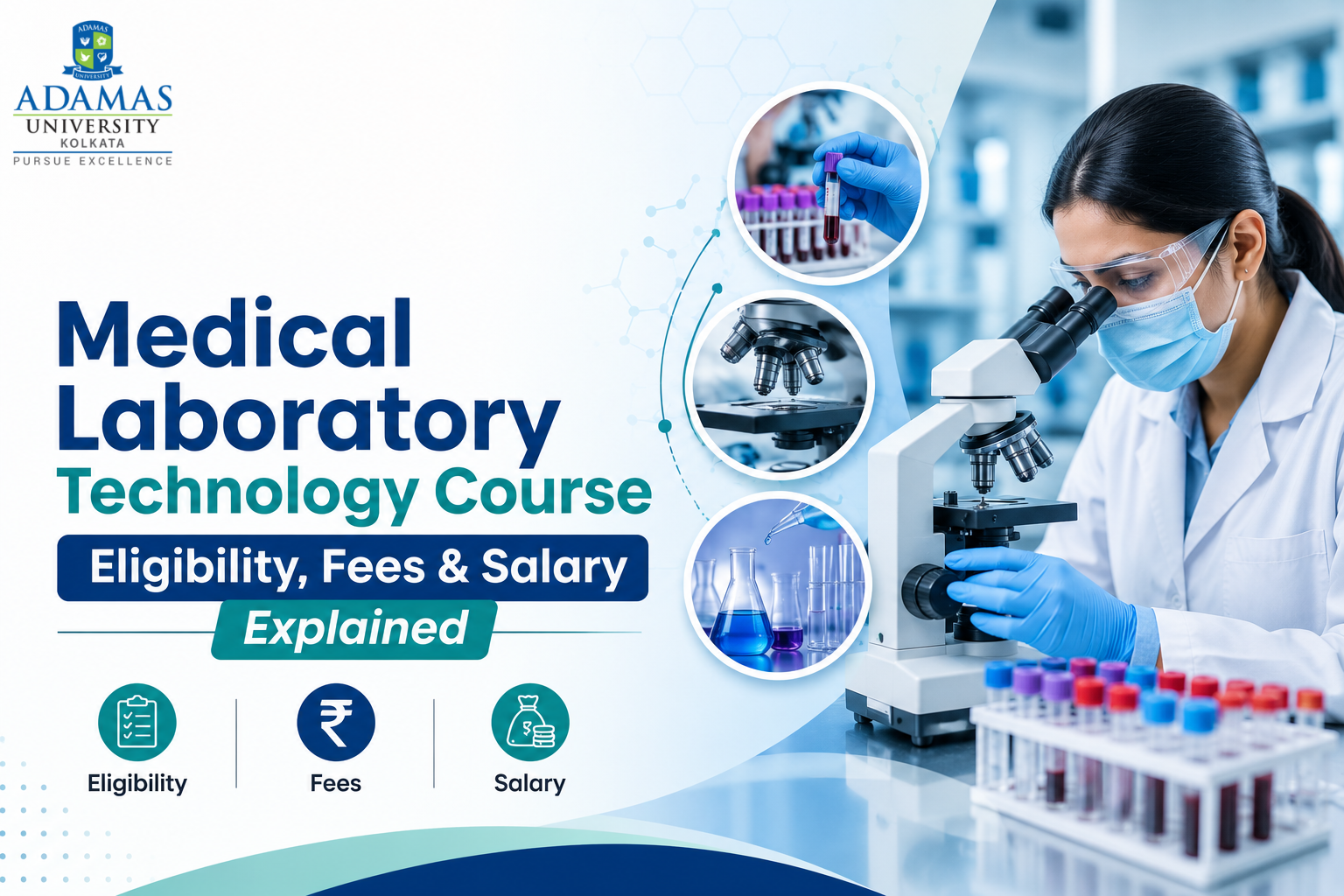
Medical Laboratory Technology Course Eligibility, Fees & Salary Explained

The doctor might write the prescription, but dozens of treatment decisions begin inside a lab.

Examining blood reports, analysing tissue samples, urine tests, cultures and screenings for infections, biochemical analysis and cultures – it helps doctors know what is happening inside the body and without accurate reports, it can delay diagnosis, treatment, and then can become a guessing game at what might be wrong.

That’s why the Medical Laboratory Technology Course has become a popular course of study for students considering a healthcare career, but not wanting to be a doctor. It is skill-based, practical and closely aligned with patient care. Also known as the Medical Lab Technology Course, also known as the BMLT Course, trains students to collect samples, run diagnostic tests, maintain records and operate lab equipment, to assist the doctor with reliable test results.

This course is suitable if you are not squeamish, are interested in machines, biology, chemistry, and are someone who prefers structured work. This is not a glamorous front-desk healthcare role, but it is a valuable behind-the-scenes job, and the importance of accuracy cannot be stressed enough.

Quick Pointers About the MLT Course 

Here is the simple view before getting into the details:

  • Course field: Allied Health Sciences
  • Popular UG option: BMLT Course or B.Sc. Medical Laboratory Technology
  • Ideal for: Students from the Science stream with Biology
  • Core subjects: Haematology, microbiology, pathology, clinical biochemistry and immunology
  • Workplaces: Hospitals, diagnostic labs, blood banks, research labs and public health labs
  • Career focus: Testing, reporting, quality control, lab safety and diagnostic support
  • Best fit for: Students who want a healthcare career with strong practical training

What Is Medical Laboratory Technology? 

Medical Laboratory Technology is the science of testing body samples to help doctors detect, monitor and treat diseases.

A medical lab technologist works with samples such as blood, urine, stool, tissue, sputum and other body fluids. These samples are tested through manual methods, microscopes, automated machines and advanced lab systems.

A trained medical lab professional does not diagnose patients like a doctor. Their role is to produce accurate reports that help doctors make the right clinical decisions.

A Medical Lab Technology Course usually teaches students:

  • Sample collection and storage
  • Blood and urine testing
  • Microscope handling
  • Clinical biochemistry
  • Microbiology cultures
  • Hematology
  • Pathology basics
  • Lab safety and infection control
  • Biomedical waste management
  • Quality control in testing
  • Handling automated diagnostic machines

This field needs patience. A small mistake in sample labelling, storage or machine handling can affect the final report. That is why the course gives strong importance to practical training and lab discipline.

Scope of the Medical Laboratory Technology Course

The scope of the Medical Laboratory Technology Course is steady because modern healthcare depends heavily on testing.

Doctors need lab reports for fever, infections, diabetes, thyroid, kidney function, liver function, fertility treatment, cancer care, emergency cases and preventive health checkups. Even routine annual health packages need trained lab professionals.

After completing a BMLT Course, students can work in:

  • Hospital laboratories
  • Private diagnostic chains
  • Pathology labs
  • Blood banks
  • Public health laboratories
  • Clinical research labs
  • Pharmaceutical labs
  • Biotechnology labs
  • Academic laboratories
  • Diagnostic equipment companies

Students can also go for higher studies in areas like medical laboratory technology, microbiology, clinical biochemistry, molecular diagnostics, pathology-related programs or public health.

The field is also growing because people are becoming more aware of preventive testing. Many patients now get tests done before a health issue becomes serious. This has increased the need for skilled lab professionals across cities and smaller towns.

MLT Course Eligibility 

For most undergraduate-level programs, students need to complete 10+2 or an equivalent qualification from a recognised board.

The usual eligibility for an MLT Course is:

  • 10+2 or equivalent from a recognised board
  • Science stream
  • Physics, Chemistry and Biology as main subjects
  • Minimum marks are usually around 50%, depending on the university
  • Admission through merit or an entrance process, based on the institution

Students should always check the official eligibility rules of the university before applying. Some institutions may have their own admission process, entrance test or counselling round.

Medical Lab Technology Course Fees 

The fees for a Medical Lab Technology Course vary depending on the type of institution, city, course duration, lab infrastructure and practical training model.

A general fee idea looks like this:

Course Type

Approximate Fee Range

Diploma in MLT

₹30,000 to ₹3 lakh

UG MLT / BMLT Course

₹1 lakh to ₹6 lakh

PG MLT Course

₹1 lakh to ₹4 lakh

Private universities may charge more because lab infrastructure, machines, practical sessions, faculty support and internship exposure add to the overall cost.

Before choosing a college, students should check what the fee includes. Look for tuition fee, examination fee, lab fee, registration charges, internship support and hostel fee if needed.

A cheaper course is not always better. In a lab-based healthcare field, practical exposure matters a lot.

Job Roles & Expected Salary After a BMLT Course 

A BMLT Course can lead to different roles in hospitals, diagnostic labs and research-based setups.

Job Role

What the Role Involves

Expected Salary Range

Medical Lab Technologist

Runs lab tests and maintains diagnostic reports

₹2.5 to ₹4.5 LPA

Lab Technician

Handles routine sample testing and lab work

₹2 to ₹3 LPA

Pathology Lab Assistant

Supports pathology testing and sample preparation

₹2 to ₹3.5 LPA

Blood Bank Technician

Works on blood collection, storage and typing

₹2.5 to ₹4 LPA

Microbiology Lab Technician

Handles cultures and infection-related tests

₹2.5 to ₹4.5 LPA

Technical Executive

Supports lab operations and diagnostic equipment processes

₹3.5 to ₹5 LPA

Salary depends on the city, employer, skills, internship experience and specialisation. Freshers may start with basic lab roles, but growth improves with experience.

Larger hospitals, reputed diagnostic chains, research labs and metro cities usually offer better salary growth. Students who learn advanced testing methods, quality control and automated machines can build stronger career paths.

B.Sc. Medical Laboratory Technology at Adamas University

Adamas University offers a B.Sc. Medical Laboratory Technology under the School of Health and Medical Sciences. The program is designed for students who want structured academic learning along with practical lab training.

The eligibility is 10+2 or equivalent in the Science group with Physics, Chemistry and Biology as main subjects and a minimum 50% aggregate.

The course focuses on routine and advanced diagnostic lab procedures, automated machines, quality control, interpretation of lab investigations and communication with healthcare teams. This makes it a strong option for students who want a lab-based healthcare career in Kolkata and eastern India.

Conclusion

The Medical Laboratory Technology Course is a practical healthcare path for students who want to work close to patient care through diagnostics.

It offers clear eligibility, steady scope, useful job roles and space for long-term growth through specialisation. Students comparing an MLT Course, Medical Lab Technology Course or BMLT Course should not look only at the fee. They should also check lab facilities, faculty, internships, course duration and career support.

To study B.Sc. Medical Laboratory Technology in Kolkata, students can explore the program at Adamas University and apply through the official admissions page.

FAQs

1. What is the difference between MLT and BMLT?

MLT means Medical Laboratory Technology. It is the broader field. BMLT usually refers to a bachelor ’s-level program in Medical Laboratory Technology.

2. Is the Medical Laboratory Technology Course good for PCB students? 

Yes. The Medical Laboratory Technology Course is a good option for students with Physics, Chemistry and Biology who want a healthcare career focused on lab testing and diagnostics.

3. What is the salary after a BMLT Course?

Freshers can usually expect around ₹2 LPA to ₹4.5 LPA, depending on the job role, city, employer and practical skills. Salary improves with experience and specialisation.

4. Can MLT graduates work in hospitals?

Yes. MLT graduates can work in hospital labs, diagnostic labs, blood banks, public health labs, research labs and pharma-related lab setups.

5. Does Adamas University offer a Medical Lab Technology Course?

Yes. Adamas University offers a B.Sc. Medical Laboratory Technology under the School of Health and Medical Sciences. It is a 4-year undergraduate program for eligible Science students.

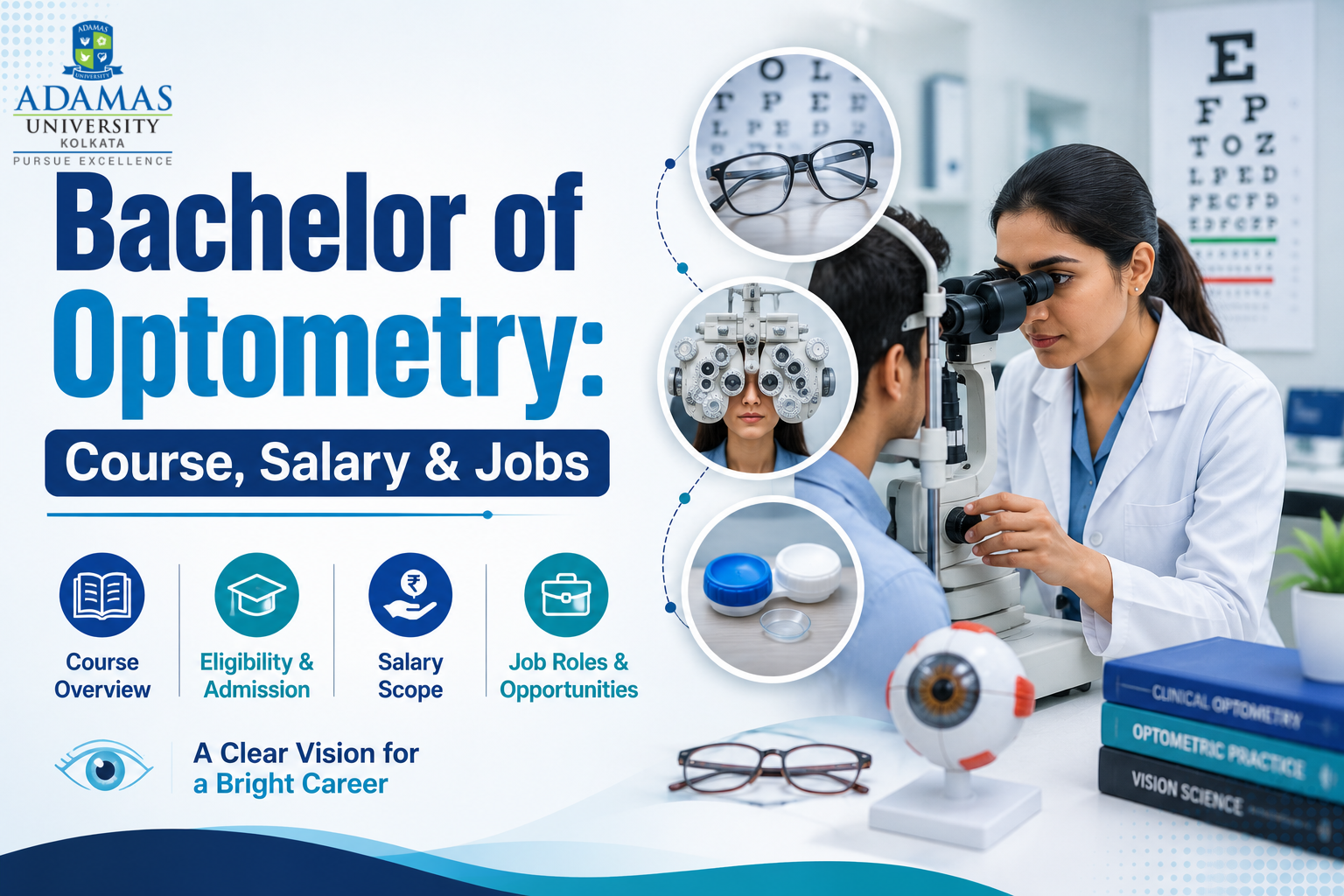
Bachelor of Optometry: Course, Salary & Jobs

Most of us will consult an eye doctor only when our vision starts getting blurry, our spectacles aren’t working, or prolonged screen time has begun to give us regular headaches.

But eye care is not just about giving out spectacles. There’s vision testing, guidance for contact lenses, screening for eye disease, low vision assessment, binocular vision assessment, and patient counselling. This is where an optometrist steps in.

The Bachelor of Optometry is a healthcare course for students who want to make a career in the science of vision, eye care and treatment. It is an excellent option for PCB students who are keen on medical sciences but not very interested in the MBBS route.

The B Optom Course, also called the BSc Optometry, trains a student in examining vision, recognising common eye problems, assisting ophthalmologists, and serving patients’ needs with corrective lenses and basic eye care.

The field requires patience, accuracy and good clinical understanding. A tiny error in testing eyes or giving prescriptions affects a person’s daily life. And that is why the Optometry Course pays equal attention to theory and practicals.

Quick Course Snapshot for Students

Here is a simple view before getting into the full Bachelor of Optometry Course Details:

  • Course name: Bachelor of Optometry
  • Common names: B Optom Course, BSc Optometry
  • Course level: Undergraduate allied health science course
  • Duration: Usually 4 years
  • Eligibility: 10+2 Science, usually with Physics, Chemistry and Biology
  • Main study areas: Eye anatomy, visual science, optics, refraction, contact lenses and clinical optometry
  • Career areas: Hospitals, eye clinics, optical chains, vision centres and private practice
  • Best suited for: Students who like healthcare, biology, patient interaction and detailed clinical work

What is a Bachelor of Optometry?

Bachelor of Optometry is an undergraduate course that deals with eye care, vision testing and the management of common visual problems.

Optometrists are not the same as ophthalmologists. An ophthalmologist is a medical doctor who can perform eye surgeries and treat complex eye diseases. An optometrist focuses on vision testing, refraction, corrective lenses, contact lenses, screening, low vision care and basic clinical support.

In simple terms, optometrists help people see better and detect possible eye issues early.

During the course, students learn how the eye works, how vision problems develop and how to assess different visual conditions. They also learn how to use clinical equipment and interact with patients in real settings.

Bachelor of Optometry Course Details

The B Optom Course usually includes classroom learning, practical lab work, clinical training and internships.

The course covers subjects such as:

  • Ocular anatomy
  • Ocular physiology
  • Optics
  • Visual science
  • Refraction
  • Contact lenses
  • Low vision and rehabilitation
  • Binocular vision
  • Ocular diseases
  • Clinical optometry
  • Community optometry
  • Ophthalmic instruments
  • Public health optometry

Students also learn how to conduct eye examinations, measure refractive errors, advise on lenses, assess visual function and support eye care professionals in clinical practice.

The practical side is very important. Students must become comfortable with patients, testing methods, instruments and case discussions. This is not a course where theory alone is enough.

A strong Optometry Course should help students build confidence in clinical observation, patient handling and accurate testing.

Eligibility for B Optom Course

The eligibility for a Bachelor of Optometry may differ slightly from one university to another. But in most cases, students need to complete 10+2 or an equivalent qualification from a recognised board.

The usual eligibility includes:

  • 10+2 or equivalent from a recognised board
  • Science background
  • Physics, Chemistry and Biology as main subjects
  • Minimum marks as required by the university
  • Admission through merit, entrance test or university-level process

Students should check the official admission page of the university before applying. Some colleges may also accept PCM students, but many health science universities prefer Biology for optometry.

For students who enjoy biology and healthcare but do not want a long medical degree, the BSc Optometry route can be a practical choice.

Scope of Bachelor of Optometry in India

The scope of optometry is growing because eye care needs are increasing across age groups.

Children need vision screening. Students face screen-related eye strain. Working professionals spend long hours on laptops. Older adults need support for age-related vision problems. People with diabetes and other health conditions also need regular eye checks.

This has created a steady demand for trained optometry professionals.

After completing a Bachelor of Optometry, students can work in:

  • Eye hospitals
  • Multispeciality hospitals
  • Optical retail chains
  • Contact lens clinics
  • Vision care centres
  • Ophthalmology clinics
  • Diagnostic eye care centres
  • Community health projects
  • NGOs working in eye health
  • Academic and training institutions

Students can also pursue higher studies such as Master of Optometry, fellowships or specialisations in contact lens practice, low vision care, paediatric optometry, binocular vision or public health optometry.

Jobs After Bachelor of Optometry

A Bachelor of Optometry opens up different job roles in clinical and retail eye care settings.

Job Role

What the Role Involves

Approximate Salary Range

Optometrist

Conducts vision testing and supports patient eye care

₹3 to ₹5 LPA

Clinical Optometrist

Works in hospitals or clinics with ophthalmologists

₹3.5 to ₹6 LPA

Contact Lens Specialist

Helps patients choose and manage contact lenses

₹3 to ₹5.5 LPA

Vision Consultant

Guides patients on lenses, eye care and visual correction

₹3 to ₹5 LPA

Optical Store Manager

Manages optical retail operations and customer care

₹3.5 to ₹6 LPA

Low Vision Specialist

Supports patients with reduced vision and visual aids

₹4 to ₹7 LPA

Ophthalmic Assistant

Assists doctors in eye clinics and diagnostic testing

₹2.5 to ₹4.5 LPA

Freshers may begin with assistant or junior optometrist roles. Salary improves with clinical exposure, communication skills, specialization and experience.

Students who become confident with refraction, patient counselling, contact lenses and diagnostic instruments can grow faster in the field.

Bachelor of Optometry at Adamas University

Adamas University offers a Bachelor of Optometry under the School of Health and Medical Sciences in Kolkata.

The course is designed to help students study eyes, visual systems, refractive errors, contact lenses, low vision, orthoptics and clinical optometry. The university mentions hands-on training, field visits and hospital training as part of the learning approach.

For the 2026 academic year, Adamas University lists the Bachelor of Optometry as a 4-year program. The eligibility is a minimum 50% aggregate in 10+2 or equivalent from a recognised board with a Science background and Physics, Chemistry and Biology.

Conclusion

A Bachelor of Optometry is a good choice if you want to work in healthcare and not be a doctor. You have a defined course path, plus practical exposure, a tendency to interact with patients and opportunities steady in hospitals, eye clinics, optical chains and vision care centres.

The work requires accuracy, care and real compassion for helping people gain appreciation for their vision! Those comparing Bachelor of Optometry Course Details should check eligibility, fees, clinical exposure, internship support and career options before applying.

To study the Optometry Course in Kolkata, students can check out the Bachelor of Optometry programme at Adamas University. You can also apply there from the official admissions page.

FAQs

What is a Bachelor of Optometry?

Bachelor of Optometry is an allied health science undergraduate course regarding eye-care, vision testing, refraction, contact lenses and basic clinical optometry practice.

Is the B Optom Course equal to BSc Optometry?

Both are courses concerning optometry and eye care. Some offer it as Bachelor of Optometry and some as BSc Optometry. Verify the exact course structure before availing.

Who can apply for an Optometry Course after 12?

Students who have completed 10+2 in Science, generally with physics, chemistry and biology, can apply. Minimum marks depend on the university and also process for admission.

What is the salary after a Bachelor of Optometry?

As a fresher, expect around ₹3 to ₹5 LPA. This too varies depending on the kind of role, city, employer and clinical skills. More with experience and further specialisations.

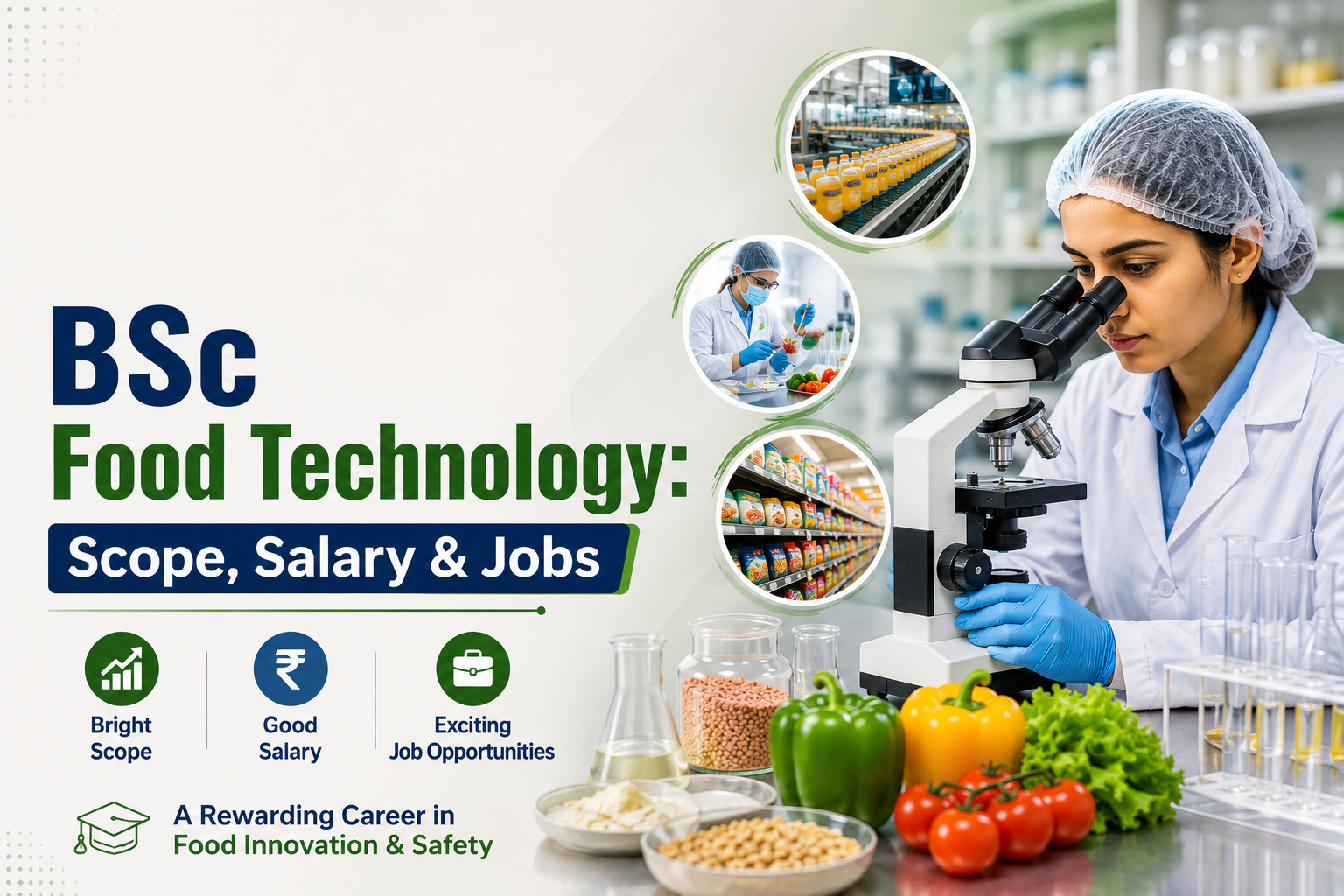
BSc Food Technology: Scope, Salary & Jobs

The next time you order a 10-minute grocery delivery featuring high-protein oat milk, vacuum-packed paneer, or flavoured Greek yoghurt, pause and look at the packaging. None of those products happened by accident. They are the result of high-level scientific engineering. According to economic data released by the India Brand Equity Foundation, the domestic food processing industry is on track to cross a valuation of $535 billion by 2026.

To drive this massive market, the world does not just need master chefs. It desperately needs scientific specialists. A BSc Food Technology is a specialised undergraduate degree that applies the principles of chemistry, raw biology, and industrial engineering to the safe manufacturing, preservation, and distribution of consumable goods. It is the ultimate bridge connecting agricultural harvests to the modern retail supermarket.

Key Points to Consider Before Pursuing a Career in Food Technology

  • The degree is a strict three-year applied science program focusing on factory mechanics and microbiology.
  • Entry-level professional compensation in India generally sits between INR 3,00,000 and INR 5,50,000 annually.
  • The manufacturing sector offers exceptionally high job stability because human nutrition is a non-negotiable daily necessity.
  • Career pathways are splitting into high-tech domains like alternative plant proteins and smart packaging.
  • The top employment hubs include multinational FMCG brands, government safety boards, and biotech research wings.

The Complete Scope of BSc Food Technology in India 

There are many opportunities for Food Technology graduates beyond cooking in traditional kitchens. The growing consumer trend of looking for healthy products, food sourced organically, and having a long shelf life with no added preservatives has resulted in record levels of demand for food technologists. When entering the workforce, Food Technology graduates can work in many diverse future industries:

  • Quick- Commerce Packaging Boom: The rise of instant delivery apps has led to the need for packaging engineers who are creating biodegradable, moisture-resistant packaging to preserve perishable products during storage and delivery.
  • The Alternative Protein Revolution: As consumers are becoming more aware of climate concerns, the demand for food scientists working within the biotech sector is increasing significantly to assist in developing plant-based proteins (meat alternatives), lab-grown dairy alternatives and the creation of vegan protein isolates.
  • Nutraceuticals and Functional Foods: After living through the COVID pandemic, the average consumer is looking for products that have healthy benefits. Graduates in Food Technology are being recruited to create fortified gummies, probiotic drinks and snacks that are diabetic-friendly.
  • Increase in Compliance by Regulatory Bodies: The tightening of quality standards by the Food Safety and Standards Authority of India (FSSAI) has created high levels of demand for food technology graduates to work in compliance within factories and with local/state authorities to prevent shutdowns resulting from breaking laws.
  • Advanced Cold-Chain Logistics: India loses billions annually to crop spoilage. Food engineers are being tasked with designing smart, temperature-controlled supply chains that safely transport raw harvests from rural farms to urban processing centres.

Top Job Roles and Salary Packages after a Bachelor’s Degree in Food Technology 

Stepping into this industry gives you a very clear corporate trajectory. The table below outlines the primary job titles available to fresh graduates, their core daily functions, and the average starting financial compensation.

Job Profile

Core Daily Responsibility

Expected Starting Salary

Food Technologist

Experimenting with raw ingredients to invent new retail flavours and extend product shelf life.

INR 3.5 LPA to INR 5.5 LPA

Quality Assurance Manager

Running microbiological lab tests on factory batches to verify zero bacterial contamination.

INR 4.0 LPA to INR 6.5 LPA

Regulatory Affairs Officer

Auditing product labels and ensuring brand ingredients comply strictly with national health codes.

INR 4.5 LPA to INR 7.0 LPA

Research & Development Associate

Working inside laboratory settings to formulate healthier, low-calorie variations of popular snacks.

INR 3.0 LPA to INR 5.0 LPA

Sector-Wise Food Technology Career Mapping 

Rather than looking at abstract academic theories, it helps to look at the actual commercial market. When you complete a Food Technology Course, your employment opportunities map directly into five massive industrial sectors:

Industrial Sector

What They Actually Produce

Prominent Hiring Brands

Commercial FMCG

Packaged snacks, soft drinks, instant noodles, and retail spices.

Britannia, PepsiCo, ITC Limited, Unilever

The Dairy Industry

Pasteurised milk, artisanal cheeses, ice creams, and whey proteins.

Amul, Mother Dairy, Lactalis India, Govind Milk

Wellness & Pharma

Energy bars, meal replacement shakes, and health supplements.

MuscleBlaze, Abbott Nutrition, Dabur, Himalaya

Public Government Hubs

National food security testing, public grain storage, and auditing.

FSSAI, Food Corporation of India (FCI), Bureau of Indian Standards

Food Service Chains

Standardising the taste and safety of quick-service restaurant batter and dips.

Jubilant FoodWorks (Domino’s), Westlife (McDonald’s)

The Big Advantages of BSc in Food Technology 

The most significant benefit of choosing Food Science and Technology is absolute economic defence. Software markets experience layoffs, and the finance sector experiences recessions, but the global population will never stop buying groceries. Furthermore, the daily routine is highly dynamic. You are rarely trapped behind a computer desk all day. Your working week is an engaging split between sterile white-coat laboratories, heavy factory production floors, and corporate tasting rooms.

Challenges in the Food Technology Industry 

This field carries a massive amount of personal responsibility. A single calculation error in a chemical preservative ratio can result in a nationwide product recall or public health crisis. You have to be comfortable working under strict hygiene protocols, wearing protective factory gear, and occasionally managing long rotational shifts during peak harvest and production seasons.

Step-by-Step Roadmap to Land Your First Job after getting the Degree in Food Technology 

If you want to secure a high-paying role immediately after your sixth semester, follow this exact sequence:

  1. Prioritise practical laboratory hours over textbook memorisation during your college lectures.
  2. Secure a mandatory two-month industrial summer internship at an active FMCG bottling or baking plant.
  3. Clear the official FSSAI Food Safety Supervisor certification exam while still in your final year.
  4. Master basic data logging software, as automated factories rely heavily on digital spreadsheet analytics.
  5. Build a hyper-specific graduation project, such as inventing a new millet-based snack or extending the shelf life of a local fruit.

Closing Lines 

The modern consumer market is evolving at lightning speed, making advanced scientific intervention the only way to feed a growing nation safely and sustainably. 

Pursuing a BSc Food Technology transforms you from a passive consumer into an active creator of the modern global supply chain. Whether your dream is to formulate the next viral health drink or protect the country from contaminated imports, this degree offers a deeply purposeful and financially secure future. 

Finding the right higher educational partner is the single most important step in this journey. Prospective students can confidently explore the advanced scientific curriculum, high-tech industrial laboratories, and stellar placement network at Adamas University to launch their career in this unstoppable sector.

FAQs 

  • What is the average salary after completing this degree?

Fresh college graduates usually start with financial packages between INR 3,00,000 and INR 5,00,000. Salaries grow rapidly as professionals gain factory management and quality testing experience.

  • Which prominent companies hire these graduates?

Top commercial recruiters include major FMCG brands like Nestle, ITC, Britannia, and Amul. Various state government health departments also hire graduates regularly.

  • Does this specific course require a biology background?

Yes, most reputed universities require students to have a science background in their higher secondary education. This typically includes passing grades in biology, physics, and chemistry.

  • Are there stable government jobs available in this field?

Absolutely. Qualified graduates can confidently apply for administrative roles like Food Safety Officer or Quality Inspector under national regulatory boards like FSSAI.

  • Is this field considered better than general agriculture?

It entirely depends on your specific career goals. Agriculture focuses on the physical growing of raw crops. Processing technology focuses on turning those harvested crops into safe, retail-ready consumer products.

Skip to content