

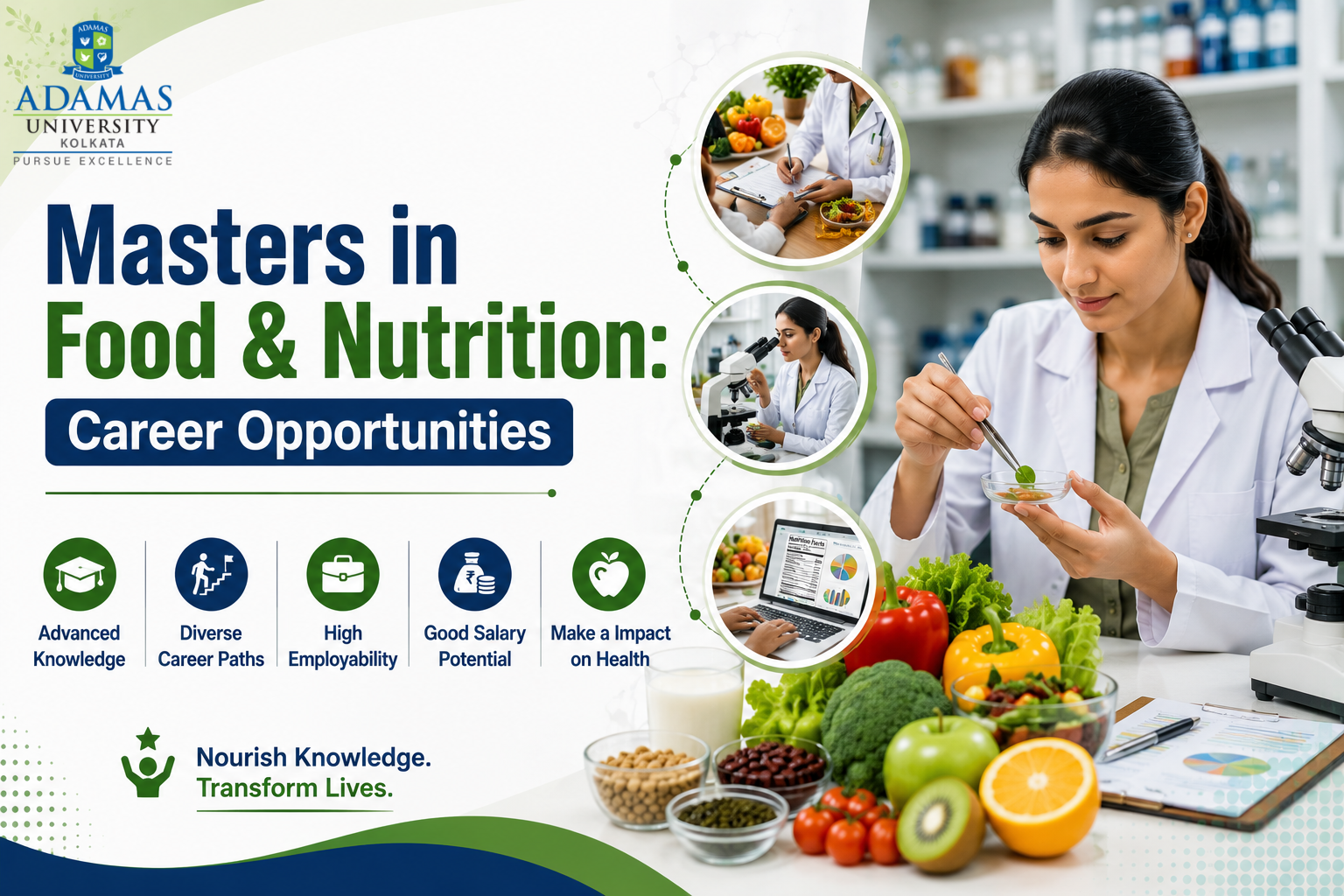
Food is associated with health concerns such as obesity, diabetes, heart disease, digestive disease, children’s nutrition, athletic performance, mental health, and surgical recovery.
As a result, nutrition professionals are increasingly in demand at hospitals, well-being facilities, manufacturers of food, schools, gyms, and public health.
The Master of Science in Food and Nutrition degree provides an understanding of how food/nutrition work within our bodies and does not just focus on a meal plan. If you hold an undergraduate degree in nutrition, food science, home economics, biology, or other related fields, you may enter the fields of clinical nutrition/public health with a Master of Science in Food and Nutrition.
The program prepares you to work in all areas, including research, product development, nutrition consulting, and nutrition education. You may find careers in food and nutrition to satisfy your interests in biology, food science, client/patient interaction, and healthcare/practical experience.
Quick Points About MSc Food and Nutrition
Here is a simple view before going into the full details:
- Course name: Master’s in Food and Nutrition
- Common degree name: MSc Food and Nutrition
- Course level: Postgraduate
- Duration: Usually 2 years
- Best suited for: Students from nutrition, food science, home science, life sciences or allied health backgrounds
- Main study areas: Human nutrition, diet therapy, food science, community nutrition, research and clinical nutrition
- Career areas: Hospitals, wellness centres, food companies, NGOs, research labs, schools and public health programs
- Work style: Mix of science, counselling, planning, research and practical application
What Is Masters in Food and Nutrition?
A Master’s in Food and Nutrition is a Post-Graduate Course that studies Food, Nutrients, and their impact on Human Health.
The course will educate students in the area of how a person’s diet will affect each stage of their life and how Nutrition can change for a person due to an illness; Pregnancy; Childhood; Age; Sports Training or Lifestyle Disease.
Students will be educated on how to develop meal plans, evaluate an individual’s Nutritional Needs, learn about Foods and their Nutrients, and also about Public Health Nutrition and the practical application of Nutrition Science on a more empirical basis.
This is NOT going to focus on how to lose weight. This will teach students about the science behind why we eat what we do. A well-designed Food and Nutrition Course will provide students with the information and the skills to make the connection between Food and Health Outcomes, and additionally build skills in Counselling, Research, Communication, and Practical Diet Planning.
MSc Food and Nutrition Course Details
An MSc Food and Nutrition program usually runs for 2 years and is divided into 4 semesters.
The course may include classroom sessions, lab work, case studies, internships, research projects and field visits.
Common subjects include:
- Advanced human nutrition
- Nutritional biochemistry
- Clinical nutrition
- Diet therapy
- Food science
- Food microbiology
- Public health nutrition
- Community nutrition
- Maternal and child nutrition
- Sports nutrition
- Food safety and quality control
- Research methodology
- Nutraceuticals
- Meal planning
- Nutrition counselling
Students also learn how to work with different types of people. A diet plan for a child is different from a diet plan for a diabetic patient. A hospital patient needs a different approach from an athlete. This is where the course becomes practical.
The better the clinical and internship exposure, the better the student’s confidence after graduation.
Eligibility for Master’s in Food and Nutrition
Eligibility rules can vary from one university to another. But most colleges ask for a bachelor’s degree in a relevant subject.
Students are usually eligible if they have studied subjects such as:
- Food and Nutrition
- Nutrition and Dietetics
- Home Science
- Food Science
- Life Sciences
- Biochemistry
- Microbiology
- Biotechnology
- Clinical Nutrition
- Allied health-related subjects
Many universities ask for a minimum of 50% marks in graduation. Some may conduct an entrance test, while others may offer admission based on merit.
Students should always check the official eligibility criteria before applying because some institutions may prefer applicants with specific nutrition or science backgrounds.
Career Scope After MSc Food and Nutrition
The career scope after a Master’s in Food and Nutrition is growing because health concerns are becoming more food-linked.
People are dealing with lifestyle diseases at younger ages. Hospitals need dietitians for patient recovery. Schools need nutrition guidance for children. Food companies need professionals who understand food safety, nutrition labels and product quality. Fitness and wellness brands need experts who can give evidence-based nutrition advice.
After completing an MSc in Food and Nutrition, students can work in:
- Hospitals
- Clinics
- Diagnostic wellness centres
- Public health departments
- NGOs
- Food manufacturing companies
- Nutraceutical companies
- Sports and fitness centres
- Schools and colleges
- Research organisations
- Corporate wellness teams
- Online nutrition platforms
Students can also start private consultations after gaining experience and the right professional credibility.
Jobs After MSc Food and Nutrition
The jobs after a Food and Nutrition Course depend on the student’s interest, internship exposure and specialisation.
|
Job Role |
Work Area |
Approximate Salary Range |
|
Clinical Dietitian |
Hospitals and clinics |
₹3 to ₹6 LPA |
|
Nutritionist |
Wellness centres, fitness brands and online platforms |
₹2.5 to ₹5 LPA |
|
Public Health Nutritionist |
NGOs, government projects and community health programs |
₹3.5 to ₹6 LPA |
|
Food Quality Executive |
Food companies and quality control labs |
₹3 to ₹5.5 LPA |
|
Sports Nutritionist |
Fitness centres, sports academies and athletes |
₹3.5 to ₹7 LPA |
|
Research Assistant |
Nutrition research and academic projects |
₹3 to ₹5 LPA |
|
Corporate Wellness Consultant |
Employee wellness programs |
₹4 to ₹8 LPA |
|
Nutrition Educator |
Schools, colleges and training centres |
₹3 to ₹6 LPA |
Freshers may start with entry-level roles, but growth improves with experience. Students who build strong counselling skills, clinical exposure, and practical diet planning ability usually perform better in this field.
Specialisations such as sports nutrition, diabetes education, paediatric nutrition, renal nutrition, oncology nutrition and public health nutrition can also improve career growth.
Skills Needed for a Career in Food and Nutrition
A degree gives the foundation, but skills shape the career.
Students should build:
- Strong understanding of human nutrition
- Practical diet planning skills
- Communication and counselling ability
- Knowledge of medical conditions
- Food safety awareness
- Research and report writing skills
- Patient handling confidence
- Awareness of Indian eating patterns
- Basic understanding of public health
- Ethical and evidence-based practice
A good nutrition professional does not scare people with food rules. They help people make practical changes that fit their health, culture, budget and routine.
B.Sc. Food, Nutrition and Dietetics at Adamas University
Adamas University offers a B.Sc. Food, Nutrition and Dietetics is under the School of Health and Medical Sciences.
The course focuses on nutrition, diet, food science, human health, nutraceuticals, clinical exposure and practical learning in hospitals, clinics and the food industry. It gives students a foundation in food, nutrition and dietetics before they move into higher studies or professional career paths.
For students who want to build a long-term career in this field, a strong undergraduate base can help before pursuing a Master’s in Food and Nutrition or a related postgraduate specialisation.
Students interested in this area can explore the Food, Nutrition and Dietetics program at Adamas University and understand how it can support future studies and career planning in nutrition.
Conclusion
Students looking for a career related to health, food science, and lifestyle improvement will find a Master’s in Food and Nutrition to be a good choice.
The Master’s in Food and Nutrition can provide an opportunity for employment in hospitals, government agencies, wellness companies, public health, food quality assurance, research, sports nutrition and corporate wellness. An MSc in Food and Nutrition is ideal for a student who enjoys science but also wants to work directly with people through counselling, planning, and educating about health.
Students should research the course structure, eligibility, internship exposure, faculty, laboratory facilities, and career support before applying for an MSc Food and Nutrition programme.
Adamas University offers an MSc Food and Nutrition programme for those who want to establish a strong foundation and provides an opportunity to apply via their official website.
FAQs
- What is a Master’s of Science in Food and Nutrition?
A Master’s degree in Food and Nutrition provides students with the ability to study the different types of food, nutrients, diet planning, clinical nutrition, public health nutrition, and how diets relate to health and diet-related diseases.
- Who is eligible to apply for an MSc in Food and Nutrition?
Generally, if a student has an undergraduate degree in Food and Nutrition, Nutrition and Dietetics, Home Science, Life Science, Biochemistry, Microbiology, or similar fields, they would be an eligible candidate for an MSc program in Food and Nutrition; however, the final determination of eligibility depends on the university’s policies.
- What type of jobs will I be able to get after my MSc in Food and Nutrition?
With a completed MSc in Food and Nutrition degree, students will have the opportunity to work as Clinical Dietitians, Nutritionists, Public Health Nutritionists, Food Quality Assurance Employees, Sports Nutritionists and Research Assistants, depending on their interests and skills.
- What will I earn after completing a Food and Nutrition program?
Most graduates should expect to earn an annual salary between ₹2.5 Lakh and ₹6 Lakh, dependent upon the area of work they enter, job location, the type of employer, job skills, internship experiences, and the common growth potential offered in each area of their careers.
- Is there an opportunity for a good career in Food and Nutrition in India?
Yes, there is ample opportunity in the grocery chain business as consumers are becoming more aware of lifestyle-related illnesses, preventative healthcare, physical fitness, children’s nutrition, gut health, and the quality of the foods they purchase.
Visited 2157 times, 1 Visit today

