

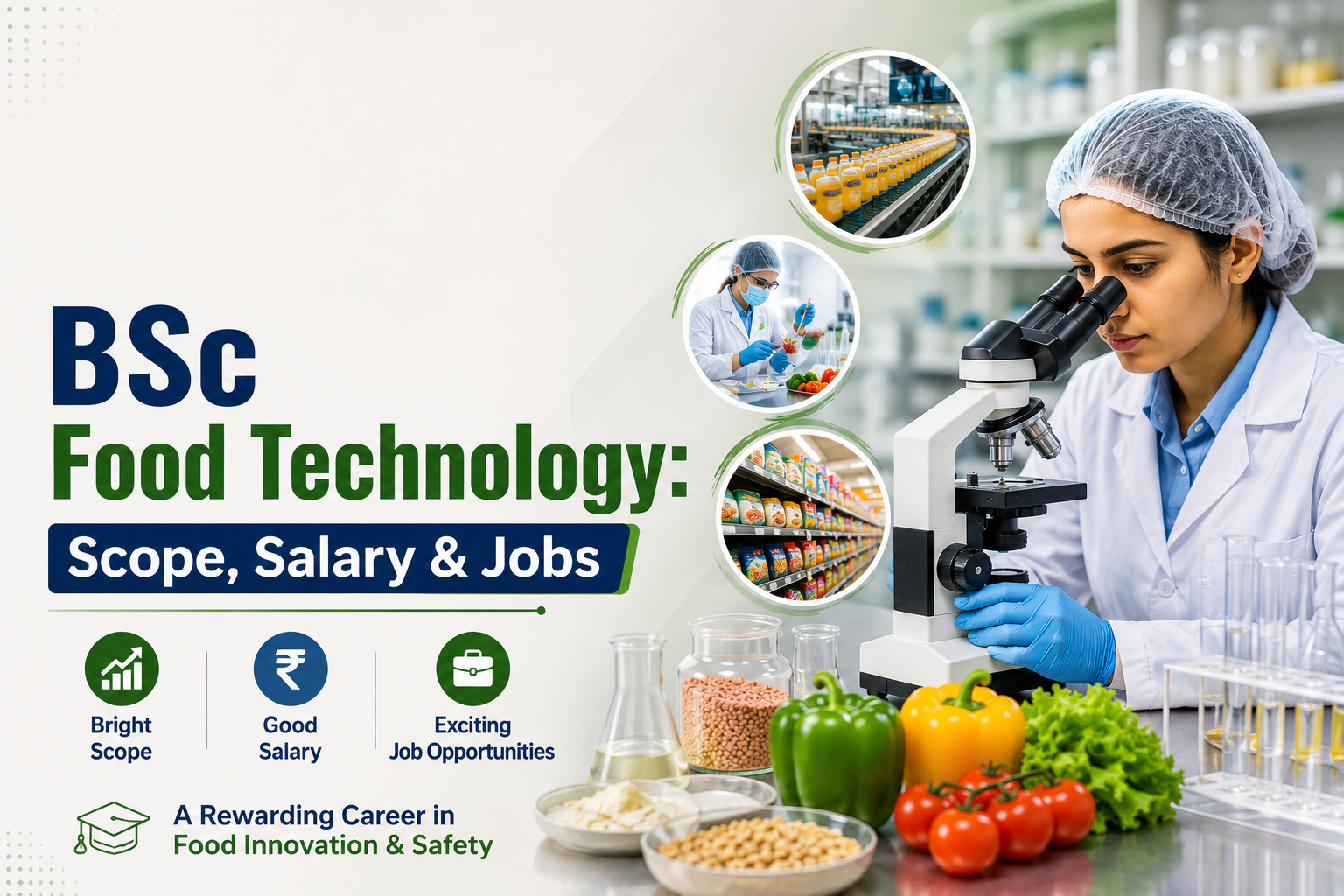
The next time you order a 10-minute grocery delivery featuring high-protein oat milk, vacuum-packed paneer, or flavoured Greek yoghurt, pause and look at the packaging. None of those products happened by accident. They are the result of high-level scientific engineering. According to economic data released by the India Brand Equity Foundation, the domestic food processing industry is on track to cross a valuation of $535 billion by 2026.
To drive this massive market, the world does not just need master chefs. It desperately needs scientific specialists. A BSc Food Technology is a specialised undergraduate degree that applies the principles of chemistry, raw biology, and industrial engineering to the safe manufacturing, preservation, and distribution of consumable goods. It is the ultimate bridge connecting agricultural harvests to the modern retail supermarket.
Key Points to Consider Before Pursuing a Career in Food Technology
- The degree is a strict three-year applied science program focusing on factory mechanics and microbiology.
- Entry-level professional compensation in India generally sits between INR 3,00,000 and INR 5,50,000 annually.
- The manufacturing sector offers exceptionally high job stability because human nutrition is a non-negotiable daily necessity.
- Career pathways are splitting into high-tech domains like alternative plant proteins and smart packaging.
- The top employment hubs include multinational FMCG brands, government safety boards, and biotech research wings.
The Complete Scope of BSc Food Technology in India
There are many opportunities for Food Technology graduates beyond cooking in traditional kitchens. The growing consumer trend of looking for healthy products, food sourced organically, and having a long shelf life with no added preservatives has resulted in record levels of demand for food technologists. When entering the workforce, Food Technology graduates can work in many diverse future industries:
- Quick- Commerce Packaging Boom: The rise of instant delivery apps has led to the need for packaging engineers who are creating biodegradable, moisture-resistant packaging to preserve perishable products during storage and delivery.
- The Alternative Protein Revolution: As consumers are becoming more aware of climate concerns, the demand for food scientists working within the biotech sector is increasing significantly to assist in developing plant-based proteins (meat alternatives), lab-grown dairy alternatives and the creation of vegan protein isolates.
- Nutraceuticals and Functional Foods: After living through the COVID pandemic, the average consumer is looking for products that have healthy benefits. Graduates in Food Technology are being recruited to create fortified gummies, probiotic drinks and snacks that are diabetic-friendly.
- Increase in Compliance by Regulatory Bodies: The tightening of quality standards by the Food Safety and Standards Authority of India (FSSAI) has created high levels of demand for food technology graduates to work in compliance within factories and with local/state authorities to prevent shutdowns resulting from breaking laws.
- Advanced Cold-Chain Logistics: India loses billions annually to crop spoilage. Food engineers are being tasked with designing smart, temperature-controlled supply chains that safely transport raw harvests from rural farms to urban processing centres.
Top Job Roles and Salary Packages after a Bachelor’s Degree in Food Technology
Stepping into this industry gives you a very clear corporate trajectory. The table below outlines the primary job titles available to fresh graduates, their core daily functions, and the average starting financial compensation.
|
Job Profile |
Core Daily Responsibility |
Expected Starting Salary |
|
Food Technologist |
Experimenting with raw ingredients to invent new retail flavours and extend product shelf life. |
INR 3.5 LPA to INR 5.5 LPA |
|
Quality Assurance Manager |
Running microbiological lab tests on factory batches to verify zero bacterial contamination. |
INR 4.0 LPA to INR 6.5 LPA |
|
Regulatory Affairs Officer |
Auditing product labels and ensuring brand ingredients comply strictly with national health codes. |
INR 4.5 LPA to INR 7.0 LPA |
|
Research & Development Associate |
Working inside laboratory settings to formulate healthier, low-calorie variations of popular snacks. |
INR 3.0 LPA to INR 5.0 LPA |
Sector-Wise Food Technology Career Mapping
Rather than looking at abstract academic theories, it helps to look at the actual commercial market. When you complete a Food Technology Course, your employment opportunities map directly into five massive industrial sectors:
|
Industrial Sector |
What They Actually Produce |
Prominent Hiring Brands |
|
Commercial FMCG |
Packaged snacks, soft drinks, instant noodles, and retail spices. |
Britannia, PepsiCo, ITC Limited, Unilever |
|
The Dairy Industry |
Pasteurised milk, artisanal cheeses, ice creams, and whey proteins. |
Amul, Mother Dairy, Lactalis India, Govind Milk |
|
Wellness & Pharma |
Energy bars, meal replacement shakes, and health supplements. |
MuscleBlaze, Abbott Nutrition, Dabur, Himalaya |
|
Public Government Hubs |
National food security testing, public grain storage, and auditing. |
FSSAI, Food Corporation of India (FCI), Bureau of Indian Standards |
|
Food Service Chains |
Standardising the taste and safety of quick-service restaurant batter and dips. |
Jubilant FoodWorks (Domino’s), Westlife (McDonald’s) |
The Big Advantages of BSc in Food Technology
The most significant benefit of choosing Food Science and Technology is absolute economic defence. Software markets experience layoffs, and the finance sector experiences recessions, but the global population will never stop buying groceries. Furthermore, the daily routine is highly dynamic. You are rarely trapped behind a computer desk all day. Your working week is an engaging split between sterile white-coat laboratories, heavy factory production floors, and corporate tasting rooms.
Challenges in the Food Technology Industry
This field carries a massive amount of personal responsibility. A single calculation error in a chemical preservative ratio can result in a nationwide product recall or public health crisis. You have to be comfortable working under strict hygiene protocols, wearing protective factory gear, and occasionally managing long rotational shifts during peak harvest and production seasons.
Step-by-Step Roadmap to Land Your First Job after getting the Degree in Food Technology
If you want to secure a high-paying role immediately after your sixth semester, follow this exact sequence:
- Prioritise practical laboratory hours over textbook memorisation during your college lectures.
- Secure a mandatory two-month industrial summer internship at an active FMCG bottling or baking plant.
- Clear the official FSSAI Food Safety Supervisor certification exam while still in your final year.
- Master basic data logging software, as automated factories rely heavily on digital spreadsheet analytics.
- Build a hyper-specific graduation project, such as inventing a new millet-based snack or extending the shelf life of a local fruit.
Closing Lines
The modern consumer market is evolving at lightning speed, making advanced scientific intervention the only way to feed a growing nation safely and sustainably.
Pursuing a BSc Food Technology transforms you from a passive consumer into an active creator of the modern global supply chain. Whether your dream is to formulate the next viral health drink or protect the country from contaminated imports, this degree offers a deeply purposeful and financially secure future.
Finding the right higher educational partner is the single most important step in this journey. Prospective students can confidently explore the advanced scientific curriculum, high-tech industrial laboratories, and stellar placement network at Adamas University to launch their career in this unstoppable sector.
FAQs
- What is the average salary after completing this degree?
Fresh college graduates usually start with financial packages between INR 3,00,000 and INR 5,00,000. Salaries grow rapidly as professionals gain factory management and quality testing experience.
- Which prominent companies hire these graduates?
Top commercial recruiters include major FMCG brands like Nestle, ITC, Britannia, and Amul. Various state government health departments also hire graduates regularly.
- Does this specific course require a biology background?
Yes, most reputed universities require students to have a science background in their higher secondary education. This typically includes passing grades in biology, physics, and chemistry.
- Are there stable government jobs available in this field?
Absolutely. Qualified graduates can confidently apply for administrative roles like Food Safety Officer or Quality Inspector under national regulatory boards like FSSAI.
- Is this field considered better than general agriculture?
It entirely depends on your specific career goals. Agriculture focuses on the physical growing of raw crops. Processing technology focuses on turning those harvested crops into safe, retail-ready consumer products.
Visited 2151 times, 1 Visit today

